
The Hungarian ruling party Fidesz has postponed the adoption of its transparency law, which had been planned for this week, until after the summer break. The proposed law foresees harsh sanctions against all civil organisations and media outlets that have ever received foreign funding. As a reason for the postponement Fidesz parliamentary group leader Máté Kocsis said that there was a consensus on the purpose of the law, but not on the methods. What's going on?
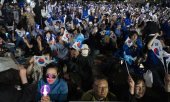
South Korea has a new president after left-wing liberal candidate Lee Jae-myung defeated his conservative rival Kim Moon-soo in a snap election and immediately took office. After several months of political turmoil that culminated in the removal of Lee's predecessor Yoon Suk-yeol from office, European commentators hope for a fresh start.
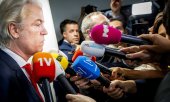
The four-party coalition government in The Hague has collapsed. Geert Wilders' right-wing populist PVV had presented plans for a significant tightening of the asylum laws last week and made the party's continued participation conditional on their acceptance, but the three other coalition partners rejected the ultimatum. After a crisis meeting on Tuesday, the PVV recalled its ministers and Prime Minister Dick Schoof resigned. Europe's press takes stock and looks ahead.
The Greek government has announced plans to tighten the immigration laws. Illegal residence in the country is to be punishable with up to five years in prison and the maximum period of detention pending deportation will increase from 18 to 24 months. In addition, previous provisions which gave irregular immigrants the chance to obtain a residence permit after seven years in the country, is to be abolished.

Following Karol Nawrocki's victory in Poland's presidential runoff, Prime Minister Donald Tusk has announced a confidence vote for 11 June. Nawrocki, who was backed by the right-wing conservative PiS party, only narrowly defeated Rafał Trzaskowski, the candidate of the liberal-conservative government camp, securing 50.9 percent against Trzaskowski's 49.1 percent. Commentators stress the European dimension of the result.
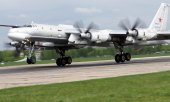
In its 'Operation Spider's Web', Ukraine attacked five military airfields in Russia with drones launched from trucks on Sunday. According to its own reports a total of 41 aircraft were destroyed. Video footage has so far shown twelve long-range bombers in the Murmansk and Irkutsk regions that had either been completely destroyed or damaged. The media discuss the impact of the attack.