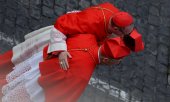
The conclave, in which 133 cardinals are convening in the Vatican to elect Pope Francis's successor, kicks off today. They will hold four ballots a day, after which the ballot papers are burnt and black smoke rises into the sky until white smoke proclaims: "Habemus Papam". Commentators take a closer look at the procedure.
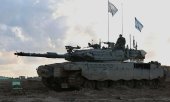
Following the announcement of Israel's plan to conquer and permanently occupy the Gaza Strip, spokespersons for the terrorist militia group Hamas have declared that they are no longer interested in negotiating a ceasefire. Israeli army chief Eyal Zamir has announced that tens of thousands of reservists will be called up for the upcoming operations.
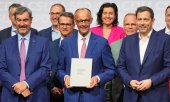
Friedrich Merz (CDU) was expected to be elected as the new German chancellor in the Bundestag today with a majority of votes from the CDU/CSU and SPD. The three parties have a total of 328 seats. However in the first round of voting he received only 310 votes, six fewer than necessary. Ahead of the vote, European media assess the political potential of a black-red coalition.
The right-wing populist Reform UK party made significant gains and secured key county councils in local elections in the UK on 1 May. National polls show Nigel Farage's party riding high in the polls. If general elections - currently scheduled for 2029 - were held now, Reform UK would be the strongest force in the country, ahead of the two main parties Labour and the Conservatives.
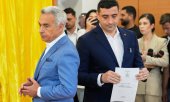
The far-right candidate of the AUR party, George Simion, has won the first round of the rerun of the presidential election in Romania. In the run-off on 18 May he will now go up against the non-affiliated mayor of Bucharest Nicușor Dan. The country's Social Democratic Prime Minister Marcel Ciolacu resigned after his governing coalition's candidate, Crin Antonescu, came in third.
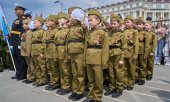
This week the whole of Europe commemorates the end of the Second World War and liberation from National Socialism. Russia will celebrate the victory over Hitler's Germany with its usual massive military parade on 9 May. The Kremlin's efforts to place its current war of aggression in Ukraine in this historical context meet with opposition in the European press.