
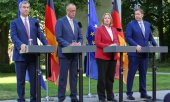
The leaders of the governing coalition in Berlin have agreed on a comprehensive reform package. The 34 measures in areas such as taxation, the pension system, labour law, innovation and red-tape reduction are intended to boost the economy and stabilise German society. "We want to get Germany back on its feet," stressed Chancellor Friedrich Merz. The media take stock.



As of July 1, customs duties are being levied on parcels of goods from non-EU countries worth less than 150 euros. These will be subject to a fixed fee of three euros per item type. Until now, such parcels had enjoyed an exemption. The tariffs are expected to hit online retailers selling cheap goods such as Temu and Shein particularly hard. Commentators debate whether this will strengthen the European economy and drive out discount retailers.

In a 927-page statement published on Tuesday, US President Donald Trump declared earnings of 2.2 billion dollars for 2025 – 3.5 times more than in the year before his second mandate began. More than 1.4 billion dollars comes from his family's cryptocurrency dealings. The news triggers a wave of disapproval in Europe's press.


Despite urgent warnings from Pope Leo XIV, the ultra-conservative Society of St Pius X in Switzerland has consecrated four bishops without the Pope's approval – an act by which those involved incur automatic excommunication and which triggers a schism within the Catholic Church. Commentators discuss how deep the rift goes.

The European Commission plans to amend the rules on the admission of Ukrainian war refugees from spring 2027, and has proposed that Ukrainian men of military age who arrive in the EU should no longer be automatically entitled to protection, although they would retain the right to apply for asylum. In Ukraine, military-age men are subject to an exit ban.

The law stipulating that anyone born in the US is automatically granted citizenship will remain valid. Donald Trump wanted to change this and, in a symbolic move, issued an executive order to that effect on the very first day of his second term as US President. Now a Supreme Court ruling has put a stop to his plan. Europe's press sees this and other decisions by the Supreme Court as a measure of the state of democracy in the US.
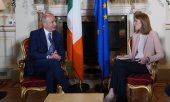
Ireland takes over the EU's rotating Council presidency today. Among the key issues on the agenda during its six-month term are new regulations on artificial intelligence, negotiations on the EU's long-term budget for 2028 to 2034, and EU enlargement. Commentators take very different views of Ireland's potential to steer the EU in the right direction.

According to media reports, Volkswagen is planning to reduce its global workforce of 657,000 by around 100,000 jobs over the next few years. In Germany, four plants belonging to Europe's largest car manufacturer could be closed in the restructuring. Other companies are also planning to axe jobs in Germany. Europe's media voice concern about Germany's future as an industrial hub and examine the causes.

Serbian President Aleksandar Vučić has announced his resignation and called for early presidential and parliamentary elections. His second and final term would normally have gone on until the end of May 2027. Vučić has offered to help his Serbian Progressive Party (SNS) in the elections. Commentators discuss the strategic considerations behind this step by the head of state.