
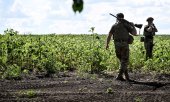
The European Commission plans to amend the rules on the admission of Ukrainian war refugees from spring 2027, and has proposed that Ukrainian men of military age who arrive in the EU should no longer be automatically entitled to protection, although they would retain the right to apply for asylum. In Ukraine, military-age men are subject to an exit ban.

As of today, customs duties will be levied on parcels of goods from non-EU countries worth less than 150 euros. These will be subject to a fixed fee of three euros per item type. Until now, such parcels had enjoyed an exemption. The tariffs are expected to hit online retailers which sell cheap goods, such as Temu and Shein, particularly hard. Commentators debate whether the measure will strengthen Europe's economy.
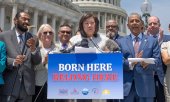
The law stipulating that anyone born in the US is automatically granted citizenship will remain valid. Donald Trump wanted to change this and, in a symbolic move, issued an executive order to that effect on the very first day of his second term as US President. Now a Supreme Court ruling has put a stop to his plan. Europe's press sees this and other decisions by the Supreme Court as a measure of the state of democracy in the US.
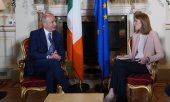
Ireland takes over the EU's rotating Council presidency today. Among the key issues on the agenda during its six-month term are new regulations on artificial intelligence, negotiations on the EU's long-term budget for 2028 to 2034, and EU enlargement. Commentators take very different views of Ireland's potential to steer the EU in the right direction.

According to media reports, Volkswagen is planning to reduce its global workforce of 657,000 by around 100,000 jobs over the next few years. In Germany, four plants belonging to Europe's largest car manufacturer could be closed in the restructuring. Other companies are also planning to axe jobs in Germany. Europe's media voice concern about Germany's future as an industrial hub and examine the causes.

Serbian President Aleksandar Vučić has announced his resignation and called for early presidential and parliamentary elections. His second and final term would normally have gone on until the end of May 2027. Vučić has offered to help his Serbian Progressive Party (SNS) in the elections. Commentators discuss the strategic considerations behind this step by the head of state.

Andy Burnham, Britain's likely next prime minister, has set out plans for a major overhaul of the British system of government. They include local authorities being given more control over water supply services and other utilities and measures to tackle the cost-of-living crisis and promote social housing. The media look at whether the strategy could work.

Several European countries have recorded in recent days the hottest temperatures for June in decades – and in some cases experienced the hottest since records began. Many regions were on the highest level of heat alert. Jim Skea, Chair of the Intergovernmental Panel on Climate Change (IPCC), said that we would see more of what we've been seeing over the past few days. The press discusses responsibilities and solutions.

Israel and Lebanon signed a framework agreement in Washington on Friday aimed at ending their hostilities. Both sides declared their intention to achieve "lasting peace and security" and bring an end to the state of war that has existed since 1948. Hezbollah was not involved in the negotiations and has said the deal is "null and void".

Turkey is getting ready to host the Nato summit in Ankara on 7 and 8 July. More than 200 people have been arrested in the run-up on the grounds that they planned to stage protests that portray Turkey as a "terrorist state". The Turkish Presidential Office is also reportedly vetting the list of accredited journalists. For Turkish commentators this is a bitter prelude to the summit.

Two devastating earthquakes struck Venezuela last week, claiming more than 1,400 lives and leaving tens of thousands injured, missing or homeless. Entire blocks of buildings collapsed. Rescue teams from within the country and abroad continue the search for survivors. Commentators see more in play here than a spontaneous readiness to help.
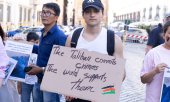
The European Commission has hosted a meeting with representatives of the Taliban in Brussels for the first time. The talks focused on the deportation of Afghans from Europe and increasing the number of the Islamist group's diplomats in the EU. Human rights activists protested against the visit. Europe's press is divided.