

Israel and Lebanon signed a framework agreement in Washington on Friday aimed at ending their hostilities. Both sides declared their intention to achieve "lasting peace and security" and bring an end to the state of war that has existed since 1948. Hezbollah was not involved in the negotiations and has said the deal is "null and void".
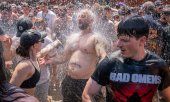
Several European countries have recorded in recent days the hottest temperatures for June in decades – and in some cases experienced the hottest since records began. Many regions were on the highest level of heat alert. Jim Skea, Chair of the Intergovernmental Panel on Climate Change (IPCC), said that we would see more of what we've been seeing over the past few days. The press discusses responsibilities and solutions.

Turkey is getting ready to host the Nato summit in Ankara on 7 and 8 July. More than 200 people have been arrested in the run-up on the grounds that they planned to stage protests that portray Turkey as a "terrorist state". The Turkish Presidential Office is also reportedly vetting the list of accredited journalists. For Turkish commentators this is a bitter prelude to the summit.

Two devastating earthquakes struck Venezuela last week, claiming more than 1,400 lives and leaving tens of thousands injured, missing or homeless. Entire blocks of buildings collapsed. Rescue teams from within the country and abroad continue the search for survivors. Commentators see more in play here than a spontaneous readiness to help.
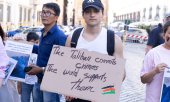
The European Commission has hosted a meeting with representatives of the Taliban in Brussels for the first time. The talks focused on the deportation of Afghans from Europe and increasing the number of the Islamist group's diplomats in the EU. Human rights activists protested against the visit. Europe's press is divided.
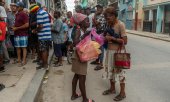
Since the energy blockade imposed by the US at the start of the year, Cuba's already struggling economy has been plunged into crisis. In a bid to ease the situation, the leadership in Havana has presented a 176-point plan to open up the economy, modelled on state capitalism as practised in China and Vietnam. Europe's press takes stock.
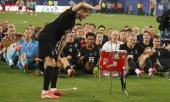
Before setting off to play in the World Cup, Norway's football team posed for a photo dressed as Vikings. Fans quickly embraced the symbolism and now have a "Viking row" routine at games where they make a rowing movement in unison while shouting 'Ro!' (row) during games. While reactions to this spectacle in Scandinavia's press are mixed, Turkey now wants to emulate the Norwegians.
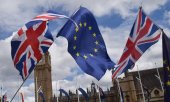
Ten years after the Brexit referendum, a majority of Britons believe that leaving the European Union was a mistake. Leading Labour politicians such as the Mayor of London, Sadiq Khan, and former Health Secretary Wes Streeting, are calling for the UK to rejoin the EU. At the same time, the Reform UK party led by "Mr Brexit" Nigel Farage has been leading the polls for months. The press looks at where the country is heading.
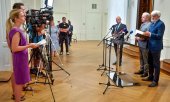
In the Czech Republic, the dispute between the right-wing populist government led by Andrej Babiš and the country's president, Petr Pavel, who comes from the pro-European opposition camp, has escalated again. The government tried to bar the head of state and commander-in-chief of the armed forces from travelling to the Nato summit in Ankara, but Pavel appealed to the Constitutional Court and won the case. The affair prompts the press to reflect on the separation of powers.
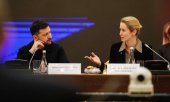
Russia has been waging a full-scale war of aggression against Ukraine since 2022 and so far all attempts at negotiations have failed to end the conflict. Ukraine is currently stepping up its attacks on targets in Russia, and the Russian economy is showing growing signs of weakness. Commentators discuss whether this might be an auspicious moment for Europe to take the initiative in negotiations.
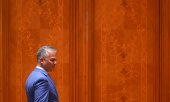
Attempts to form a new government in Romania have failed after the parliament rejected Adrian Veștea, the candidate nominated by President Nicușor Dan for the post of Prime Minister. The previous Liberal government, led by Prime Minister Ilie Bolojan, was ousted at the end of May following a vote of no confidence put forward by the PSD – until then part of the coalition government – together the far-right AUR.