

With a valuation of around 1.8 trillion US dollars, the space technology company SpaceX is going public today, June 12. Founder and majority shareholder Elon Musk – already the richest person in the world by far – is expected to become the first ever trillionaire. The staggering figures provoke some admiration and a lot of consternation in Europe's press.

After ten years of negotiations and preparations, the Common European Asylum System comes into force today. The system is meant to centralise data collection, distribute the burden more fairly among EU member states and limit immigration overall – for example by setting up centres for fast-track asylum procedures at the EU's external borders. Media reactions are for the most part sceptical.

The rape and murder of 11-year-old Lyhanna has sparked a wave of outrage in France. Despite the fact that her alleged killer had been reported to the police on several occasions in the past, the judicial authorities failed to take action. Justice Minister Gérald Darmanin is now rushing to have 70,000 cases of sexual violence against minors reviewed.

The Estonian Parliament has passed a law that fundamentally changes its Penal Code on sexual offences after total of 69 members of parliament voted in favour with only 8 against. The basic principle of the 'yes model' is that sexual contact without clear consent is considered rape. This brings Estonian law into line with the Istanbul Convention on preventing violence against women.

The Fifa Men's World Cup has kicked off, the first matches have been played. A record 48 teams will compete in more than 100 games held across the three host nations, Mexico, Canada and the US, until the final on July 19. But many of the organisers' decisions seem at odds with the values the sport is supposed to embody, note commentators.
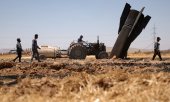
Last Sunday marked the 100th day of the US and Israel's war against Iran. Despite the agreed ceasefire, military clashes between Washington and Tehran continue to occur. In addition, Lebanon remains a flashpoint where Israel and Hezbollah are engaged in fierce fighting. Commentators paint a grim picture of the situation in the Middle East.

A second night of rioting has rocked Northern Ireland after a video of a knife attack which left a man seriously injured on Monday was circulated online. The incident has triggered mass anti-immigration protests, with vehicles and buildings being set on fire. According to the police, the suspected perpetrator is a 30-year-old man from Sudan.

Ukrainian President Volodymyr Zelensky has signed a decree giving a Ukrainian army unit the honorary title "Heroes of the UPA". However, in Poland the nationalist Ukrainska Povstanska Armiia (UPA) or Ukrainian Insurgent Army is notorious for the mass murder of civilians during WW II. Polish President Karol Nawrocki and his predecessor Lech Wałęsa are now calling for Zelensky to be stripped of the Order of the White Eagle, Poland's highest state honour, which he was awarded in 2023. Can the rift be bridged?

The European FCAS fighter jet project has failed. The German and French governments announced on Monday that the joint development of the aircraft is to be halted. The jet was to form the central pillar of the Future Combat Air System, a key project in European defence cooperation, however Airbus and Dassault, the two companies working on the project, were unable to agree on who should take the lead.

Chinese President Xi Jinping has paid a two-day visit to North Korea. No matter how the international situation develops, China will remain committed to its traditional friendship with North Korea, Xi said during a meeting with Kim Jong-un in Pyongyang. Commentators examine the complex web of ties between the two countries.

Armenia's ruling party Civil Contract has won the parliamentary election, securing just under 50 percent of the vote and an absolute majority of seats. Party leader Prime Minister Nikol Pashinyan, who has been in power since 2018, sees this as a clear mandate to continue the country's pro-Western course. All the other parties that will form the opposition in parliament advocate a more pro-Russian course. Europe's press discusses the sharp divide.

Hungarian Prime Minister Péter Magyar has been in office for one month now. In that time he has made numerous official visits abroad, set a new course in international policy and met with European Commission President Ursula von der Leyen, German Chancellor Friedrich Merz and French President Emmanuel Macron, among others. Commentators look at the progress and the obstacles.