
Framework deal on Greenland: can Europe relax?
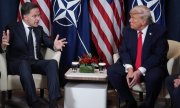
Following talks with Nato Secretary General Mark Rutte in Davos, US President Donald Trump has backed down on his threat to impose punitive tariffs on European countries, saying that the two had agreed on a framework for an agreement on Greenland. According to media reports, the deal involves a revision of the 1951 defence agreement between the US and Denmark for the Arctic island.
Choose the path of least resistance
Europe has got off lightly and should now refrain from doing anything else that might upset Trump, says The Spectator:
“Doing absolutely nothing is a task that sits well within the skills set of Europe’s current leadership. Saying absolutely nothing is one they are less well practiced at. ... There are a wide variety of moves that the Europeans could make at this stage, most of them insubstantial, to signal that they are not going to be pushed around. But the option of just not doing anything is on the table, and for once the path of least resistance might just be the correct one. It may seem timid or craven, but that might just be our lot for the time being.”
Not a brilliant deal, but a retreat
Dagens Nyheter says there can be no talk of détente:
“One thing should be clear: this is not a brilliant deal, but a retreat. It was not Rutte's plea to 'Daddy' but the courage of the Danes in standing up to the tyrant that made an impact. We must also be clear that we must continue our resistance - against the leader of the country that should actually be our main ally. He is a man who can never make Article 5 credible. Nato has survived Davos. But Nato as we knew it no longer exists. Our military rearmament must be massively accelerated.”
Willingness to negotiate is progress
Europe should view these latest developments as an opportunity, El Mundo argues:
“This gesture indicates a willingness to negotiate which contrasts with Trump's confrontational rhetoric so far and would represent progress. ... However, this progress is accompanied by worrying signs. Hours earlier, Trump reaffirmed an intolerable contempt for Europe, which was expressed in three key points: his strategic interest in the Arctic island, his intention to impose an unjust peace on Ukraine, and his disregard for Nato. ... Europe must see the framework of an agreement on Greenland as an opportunity to strengthen its strategic position, not as a guarantee of stability. Trump's unpredictability calls for caution.”
This is how to stop Trump
For L'Echo the reaction of the markets was decisive:
“We must also face facts: what stopped Donald Trump was above all the negative reaction of the markets, as was already the case in the aftermath of Liberation Day last April, when the US president announced his tariffs. At the height of the tensions on Tuesday, Wall Street saw selling movements that were worrying for the White House. An analysis by an expert at Deutsche Bank highlighted the risk for the US that European investors could offload some of their 8 trillion dollars in US government bonds. ... A strong and united political stance accompanied by a reaction from the markets are the ingredients needed to stop the US president.”
US no longer an ally
On the republica.ro website, journalist Sorin Cucerai says the EU must give up the idea that the Nato alliance with the US can be maintained in the long term:
“For Europeans, America is no longer an ally but merely a partner. In certain areas this partnership will be close, in others less so, and in others there will be direct competition. But there will no longer be an alliance. In practical terms, we are returning to the relationship that existed between Europe and the US before World War II. This is because Europe has (re)gained its strategic autonomy. So for Europeans, security guarantees no longer come from Washington, but from Brussels.”
Finland will gladly help break the ice
The dispute over the Arctic could be beneficial for Helsinki economically, Kauppalehti speculates:
“Finnish shipyards have built dozens of icebreakers and ice-breaking ships for the Soviet Union and Russia in the past, so it is also in Finland's interest to strengthen the presence of its ally, the United States, in the Arctic. ... In Davos this week, there was talk of boosting Nato presence in the Arctic and using increased defence spending for European icebreakers. If there is anything positive to be gained from this extraordinary situation, it is the possibility that Finland will receive new orders for icebreakers and that security in the Arctic will get the attention it deserves.”