
France: social security budget approved. What comes next?
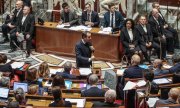
In the battle over the 2026 budget, the French government under Prime Minister Sébastien Lecornu has taken a major step forward: thanks to a compromise with the Socialists and despite abstentions within its own camp, the National Assembly has passed the 'social security budget', which makes up the bulk of the overall budget, by a narrow majority. Europe's press nonetheless warns that not all hurdles have been cleared yet.
Far from a done deal
Ouest‑France sees the government's hope that the rest of the budget will also be passed as futile:
“The reality is that the opposition parties cannot do with the general budget what they agreed to do with the social security budget – namely, vote in favor or abstain. Former President François Hollande reiterated on RTL on Tuesday morning: 'To bring this spectacle to an end, the prime minister will have to resort to Article 49.3 of the Constitution,' which allows the government to bypass a parliamentary vote. The article was designed precisely as a way out of such deadlocked situations. Although Sébastien Lecornu has promised – at the request of the left – not to invoke it, sometimes necessity knows no law.”
Positioning themselves for 2027
Paris correspondent Floor Bouma explains in NRC why reaching agreements is so difficult:
“Looming over all the disputes and obstacles in passing a new budget is the shadow of 'deux mille vingt‑sept' – the presidential election of April 2027. Macron can no longer run for president and has no clear successor. As a result, all parties are trying to set themselves apart from the others and are therefore even less willing to make concessions – not least because Macron is particularly unpopular.”
Advances in the country's parliamentary culture
Le Monde, by contrast, welcomes the growing ability to forge compromises:
“A failure would have sent a worrying signal – for the National Assembly, which would have been exposed as incapable of forming majorities and thus potentially useless, and for representative democracy itself, which is increasingly under attack. Can this painful compromise serve as a blueprint for what lies ahead on a political stage that may remain permanently fragmented? Perhaps, as Budget Minister Amélie de Montchalin put it, this 'democratic experiment' could help advance France's parliamentary culture – or even prepare it for future 'coalition agreements' of the kind that are commonplace in certain neighbouring countries.”