
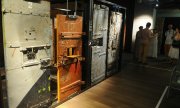
Moscow: death knell for Gulag Museum
Moscow's Gulag History Museum, which was initially closed in November 2024 due to alleged fire safety violations, will now be given a new thematic orientation. According to the newly appointed museum director it will be converted into a "memorial museum for the victims of the genocide of the Soviet people" and document Nazi war crimes during WWII.
Self-critical rather than self-glorifying
Art critic Irina Mak stresses the uniqueness of this museum project in The Moscow Times:
“It was the only museum left in the country whose activities were not focused on glorification but on self-criticism and reflection. Here, there was grounds for shame, and nothing to be proud of. No one else in the Russian museum world ever dared to do such a thing, and no one will dare to do it in the foreseeable future. And it was not just a research, scientific or social project. From the first day to the last, the Gulag History Museum was an outstanding conceptual art project.”
Solzhenitsyn still on the curriculum - for now
The closing of the museum does not mean the complete denial of Stalinist repression in Russia, Radio Kommersant FM underlines:
“The Russian Federation recognises at the state level the fact of political repression during Joseph Stalin's rule. ... Aleksandr Solzhenitsyn's magnum opus, The Gulag Archipelago, is still taught in schools. ... And the writer himself - a fierce opponent of Stalinism and Soviet power - is published without restrictions in Russia and considered a staunch patriot. ... It has always been assumed that the truth about the so-called dark spots in history only benefits the country and in no way harms it. But the voices of those who are convinced of the opposite are now much louder.”
An inconvenient reflection of the present
Novaya Gazeta explains why the regime wants to repurpose the museum:
“It seems that discussions about the mechanisms of terror - denunciations, 'enemies of the people', punitive bureaucracy, closed courts, fear - can all too easily be understood as a reflection of the present. And those who made the decision to close the museum understand this all too well. For those in power, this is toxic: such comparisons sensitise society to today's arbitrariness and make the language of state propaganda less convincing. It is therefore more advantageous to shift the focus of historical perspective onto issues where the violence comes from outside rather than from within, where the moral line has been drawn in advance and doesn't require further questions directed at one's own state.”