
How is the German government faring?
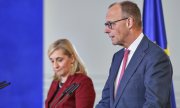
The German government has just agreed on a major health reform which foresees, among other things, increased patient contributions for medicines and restrictions on family insurance coverage. This comes at a time when Chancellor Friedrich Merz's popularity has dropped to 15 percent, according to a recent Forsa poll, and a survey by public broadcaster ARD found that 81 percent of the population think wealth is unfairly distributed in Germany.
High potential for conflict
For SRF correspondent Simone Fatzer, the approved healthcare reform does little to improve the image of the Merz coalition:
“It is a good sign and good for future cooperation that the government was able to agree on these steps. But as Merz put it, even that was a 'major feat'. How loud the criticism from the governing parties will be remains to be seen. There are already rumblings of discontent. Pension and tax reforms are on the government's agenda for the coming weeks. They will cut deep and thus be highly contentious. And since the governing parties are doing so badly in the polls and the opposition AfD is doing so well, tensions are rising – which won't help the ability to compromise one bit.”
Inflated expectations
Aktuálně.cz looks at why the German government is struggling:
“The answer is of course complex and multifaceted. The simplest explanation could be that the Germans' expectations are simply far higher than the country's current economic performance. Europe's leading economic power survives on debt and the political elites are unable to say this to their voters. The country is taking on debt not only for future investments, but also for day-to-day operations. And then the trade unions come up with totally incomprehensible demands that would bring many a struggling industrial giant to its knees. Yes, you cannot say it often enough: the expectations are completely at odds with economic reality.”
Nerves in tatters
This coalition is doomed, argues the Frankfurter Allgemeine Zeitung:
“It might hold out until the next elections, but it will never come up with the policies needed to free the country from the AfD. ... The SPD is incapable of anything except a structurally conservative approach aimed at preserving the status quo. The CDU is trying to do the exact opposite: tearing down moribund structures in order to make up for lost time. The SPD is only thinking about its own survival; the CDU about how to undermine the AfD. So everyone's on edge. And the result is not less but more dissatisfaction, not less but more AfD.”