
UN: 1.5-degree-C warming target out of reach
In 2015, a majority of countries worldwide agreed to aim to limit global warming to a maximum of 1.5 degrees Celsius above pre-industrial levels. The UN has now announced that this target can no longer be met and that the average rise in temperatures will be higher. The media examine what can – and must – be done now.
Every tenth of a degree counts
The Frankfurter Rundschau urges the public not to let up in their efforts:
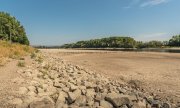
“The 1.5-degree mark is not a cliff edge beyond which all attempts become futile. It's a warning line. With every additional tenth of a degree, heatwaves, droughts, torrential rain, crop losses and rising sea levels are exacerbated. And with every year spent above this threshold the risk that ice sheets, the Amazon rainforest or major ocean currents will reach irreversible tipping points increases. The consequences of just 1.4 degrees of global warming were on display across Europe this summer: record-breaking heat, drought, wildfires and low river levels – plus tens of thousands of additional deaths during the heatwaves. To believe that we can adapt to an increase of two or even three degrees is irresponsible.”
A global project is the only option
Der Spiegel sees three potential solutions for limiting global warming to 1.5 degrees Celsius:
“And we need them all. We must arm our societies against the dangers of a warmer climate. Humanity must stop emitting CO2 as quickly as possible. And it must recapture hundreds of billions of tonnes of CO2. Right now no one knows how this can be accomplished. Planting trees is no longer enough. We need a large-scale global project to remove CO₂ from the atmosphere.”
Reservoirs must replace glaciers
More water reservoirs need to be built in the Swiss Alps to alleviate the effects of vanishing glaciers, the Neue Zürcher Zeitung puts in:
“According to a study by the National Centre for Climate Services, 50 to 90 percent of the glaciers will probably have disappeared by the middle of the century. Mountain regions must prepare for this – and not just for the next season. Time and again Switzerland has been described as Europe's water tower; the Alpine glaciers are still its largest water reservoir. But once the glaciers have disappeared these natural reservoirs will be lost. ... The dams in the Alps have so far formed the backbone of Swiss electricity generation. In future they will become increasingly important in other areas too: in supplying water for the entire country.”
Speed up the green transition
Avvenire sees a social and economic crisis brewing:
“The coming autumn is bound to be a hot one. Global warming is taking its toll, compounded by the El Niño cycle. ... Whether it will also be hot in terms of social tensions, however, depends solely on us and our ability to properly understand and manage the two transitions we are currently experiencing – ecological and digital. As far as the ecological transition is concerned, we must pick up the pace and resolutely pursue the only form of sovereignty we truly need: energy independence. In doing so we must bear in mind that dependence on fossil fuels causes a particularly grave malaise: supply-shock inflation.”