
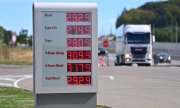
What to do about the petrol price shock?
The situation in the straits of Hormuz and Bab al-Mandab and the decline in Russian exports due to the war in Ukraine are putting pressure on global crude oil and fuel markets. Diesel prices in particular have been hitting record highs. European governments are once again trying to counter market trends with tax cuts or subsidies. In Germany, for example, filling up is to cost 17 cents less per litre as of October. Are such fuel discounts a good idea?
Leave regulation to the market
The Neue Zürcher Zeitung makes the case against a cap on fuel prices:
“The purpose of a price is to influence behaviour. High prices are intended to curb demand – also with diesel and petrol. There is no way round lower demand: due to the uncertain situation in the Persian Gulf, the dangerous transport routes in the Middle East and the damage to Russian refineries, the fuel that is reaching the global market is not enough to cover demand. The remaining refineries around the world are operating at full capacity. Delaying the process of adjusting demand to lower supply will only prolong the problem. It reduces the incentives to use fuel sparingly and to invest in efficiency or alternative powertrains.”
Cash handouts won't solve the problem
Népszava questions the Hungarian government's cash payments to owners of diesel cars:
“There is something rather strange about a government responding to a problem that has its roots in the global market by transferring money [around 55 euros] to the owners of the affected vehicles. It's as if the state were obliged to foot the bill whenever there is a significant price change and compensate people for what the market has just taken out of their pockets. Naturally the Hungarian government cannot solve the global diesel crisis on its own. ... But it can influence the domestic response to it. The Tisza government has opted for direct cash payments. This will undoubtedly offer some relief to those who receive the money, but it does nothing to address the root causes of the problem.”
Cynical use of scuttergun approach
Yet another fuel price discount is senseless, Der Tagesspiegel fumes:
“This latest round is expected to cost 2.5 billion euros. Suddenly there's money available. After a summer when the government cut advance maintenance payments for single parents, postponed a promised increase in student loans and scrapped funding for queer youth organisations because of a supposed lack of funding, this is nothing short of cynical. The state is doling out money hand over fist, and legitimising the oil companies' outrageous price mark-ups. ... People must realise: the fossil fuel era is ending, whatever the subsidies. The government must stop this, and now.”
Don’t talk green transition out of existence
In Belgium, there are calls for the state to intervene to offset high diesel prices. This is not the right approach, warns De Morgen:
“Every motorist who trades in their diesel car for a cleaner model and every family that replaces expensive natural gas with a heat pump is helping to make our society just a tiny bit less dependent on geopolitically unstable fossil fuel sources. Politicians should consistently encourage this transition rather than discouraging it. ... But one wonders: do politicians who advocate phasing out diesel and turning off the gas tap one day and then call for compensation for expensive diesel and gas the next actually realise what they're saying?”
Oil market has become a battlefield
Vzglyad examines the background to the crisis:
“The oil market is no longer a market in the traditional sense of the word. It has become a battlefield on which the price is not determined by supply and demand but by a particular buyer's ability – or inability – to reach a particular seller. Opec is severely weakened, long-term contracts are being renegotiated on the spur of the moment, and forecasts by the world's leading investment banks are replaced by real-time reports from the field and analyses of Trump's contradictory rhetoric. ... The major fuel crisis is only just beginning, and the crucial question is not how much a barrel will cost, but who will be able to get hold of it.”