


Estonia and Sweden have announced plans to transfer Swedish prisoners to Tartu Prison, two-thirds of which currently stands empty. Up to 600 low-risk inmates are to be accommodated there, which will secure 400 jobs, Estonian Justice Minister Liisa-Ly Pakosta explained. Sweden was actively looking for ways to expand its prison system capacities, Pakosta's Swedish counterpart Gunnar Strömmer told reporters.
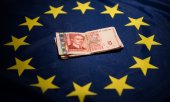
With a positive convergence report, the EU Commission gave the green light on Wednesday for Bulgaria to join the Eurozone. There have been repeated protests against the long-standing plan in the country recently, fuelled by President Rumen Radev's call for a referendum on the issue. Overall, the media take a positive view of the move, although there are also those who voice certain doubts.

A Berlin court has ruled that it is against EU law for border police to refuse entry to asylum seekers found on German territory during border controls, and that Germany violated asylum law when it sent back three Somali nationals at its border with Poland. The ruling comes after Interior Minister Alexander Dobrindt ordered stepped-up border controls and authorised expulsions in May. Commentators take different views of the judgement.

The Hungarian ruling party Fidesz has postponed the adoption of its transparency law, which had been planned for this week, until after the summer break. The proposed law foresees harsh sanctions against all civil organisations and media outlets that have ever received foreign funding. As a reason for the postponement Fidesz parliamentary group leader Máté Kocsis said that there was a consensus on the purpose of the law, but not on the methods. What's going on?

The four-party coalition government in The Hague has collapsed. Geert Wilders' right-wing populist PVV had presented plans for a significant tightening of the asylum laws last week and made the party's continued participation conditional on their acceptance, but the three other coalition partners rejected the ultimatum. After a crisis meeting on Tuesday, the PVV recalled its ministers and Prime Minister Dick Schoof resigned. Europe's press takes stock and looks ahead.

Following Karol Nawrocki's victory in Poland's presidential runoff, Prime Minister Donald Tusk has announced a confidence vote for 11 June. Nawrocki, who was backed by the right-wing conservative PiS party, only narrowly defeated Rafał Trzaskowski, the candidate of the liberal-conservative government camp, securing 50.9 percent against Trzaskowski's 49.1 percent. Commentators stress the European dimension of the result.
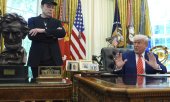
Scandal-plagued tech multibillionaire Elon Musk is leaving politics. His role as head of the controversial Department of Government Efficiency, which was tasked with streamlining the state apparatus and cutting government costs, was limited by law to 130 days. Prior to his exit his initially close relationship with Trump had already visibly cooled in recent weeks and his electric car company Tesla had also run into difficulties due to a slump in sales.
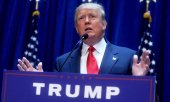
Since he was first sworn in, US President Donald Trump has caused a stir on an almost daily basis with new announcements of extreme measures in politics and the economy. Many of them - including major tariff hikes - have been cancelled or postponed a few days after being announced. Others, such as mass redundancies or deportations, have been put on hold by the courts. Europe's press takes stock of this erratic style of government.