
Paris meeting: moving closer to peace in Ukraine?
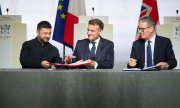
France, the UK and Ukraine signed a declaration of intent in Paris on Tuesday to send a European multinational force to Ukraine. At the 'coalition of the willing' meeting, US Special Envoy Steve Witkoff also pledged to support Ukraine's security. Reactions in the press range from hope to scepticism.
Russia under diplomatic pressure
In Postimees, security expert Rainer Saks voices optimism:
“The declaration is an important step that will lay the groundwork for a clearer role for Europe in ending the aggression against Ukraine and ensuring the future security of Ukraine and Europe. ... The peace process in Ukraine has begun with very tangible steps, and it is becoming increasingly difficult for Russia to engage in the process on its own terms. Russia is under diplomatic pressure, but that does not mean that an agreement with Russia can be reached quickly. Its diplomatic scope has narrowed, but the Russian government will certainly make further attempts to influence the process in its favour.”
An uncertain promise
Ilta-Sanomat doesn't have high expectations:
“The promise of security guarantees is evidence - albeit weak - of continued support for Ukraine. However, this remains an uncertain promise for the future until the prerequisite for that promise is met, namely, a ceasefire. Russia is continuing its brutal and illegal war of aggression in Ukraine and has so far shown no willingness or intention to agree to a ceasefire, truce or peace. ... The credibility of the security guarantees is also undermined by the fact that they rely heavily on the United States and its role as guarantor - without any guarantee that it will remain reliable.”
Terrified of crossing Trump
The coalition of the willing seems incapable of truly closing ranks, complains the Irish Examiner:
“Europe's 'coalition of the willing' sundered in the face of Washington's continued assault on political norms. All of that coalition announced progress on security assurances for Ukraine, but only some signed up to a statement of solidarity with Denmark. Individual leaders appear terrified of crossing Trump on Greenland, yet alive to the need to keep the Americans on board when it comes to defending Ukraine and, ultimately, Europe itself and anywhere else for that matter.”
Accelerated accession unrealistic
One of the guarantees is Ukraine's rapid accession to the EU. La Stampa is sceptical:
“The problem is that Zelensky wants the document to include an accession date to make it easier for him to 'sell' the deal to his citizens. According to several EU sources, the Ukrainian president is determined to put the peace plan - and thus also the question of the territories - to a referendum, which is to be linked to the presidential election. ... The problem, however, is that many European governments have doubts as to whether a date for Ukraine's accession to the EU can be agreed upon at this stage. In addition, there are fears in many capital cities that giving Kyiv preferential treatment could be detrimental to the Western Balkan accession candidates, who have been waiting for a long time.”
Give Putin an ultimatum
Ukraine's Western allies are too hesitant, sociologist Igor Eidman comments on Facebook:
“The coalition of the 'willing' is seriously discussing security guarantees for Ukraine, including the deployment of British and French troops once a ceasefire starts. But this is pointless. Putin is not willing to agree to a ceasefire and will never agree to one, especially not if it means that Nato troops will move into Ukraine. The decision to deploy such troops should not be made after the ceasefire, but as a way of achieving it. Putin must simply be given an ultimatum: if you don't end the war, we will begin deploying troops on 1 February. Then he might get scared and stop, but not before that.”