
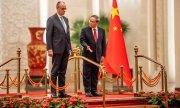
Merz in China: birth of a new axis?
On a multi-day visit to Germany's most important trading partner, China, Chancellor Friedrich Merz declared his intention to deepen both diplomatic and economic relations. After a meeting with President Xi Jinping, Merz and Prime Minister Li Qiang signed several agreements on issues such as climate change and the fight against animal diseases with a view to closer collaboration.
Two powerful economies seek common ground
Considering how low the expectations were, Merz was quite successful, the taz puts in:
“For example, a deal for 120 Airbus aircraft that the Chinese want to buy. Or the announcement that both sides will hold regular government consultations. It seems that a new normal is setting in between the world's second and third largest economies. But expecting concessions on key issues was unrealistic from the outset.”
Europeanise trade policy
Economic policy should be implemented at the European level, advises Handelsblatt:
“The Chinese are playing for time - time that Germany doesn't have. Deindustrialisation is happening now. The answer to this is Europe. The Chinese are dependent on the purchasing power of 450 million Europeans. Who else is going to buy their products? America is closing itself off and countries like Turkey and Brazil are also seeking refuge behind customs barriers. ... Consultations with the Chinese government may make sense, but not by individual EU countries. The bilateralisation of relations is a trap that Berlin should not fall into. All major trade policy decisions are made in Brussels. If Merz wants to learn from Merkel's mistakes, he must Europeanise China policy.”
More and more Chinese products for Germany
Izvestia explains the origins of Germany's trade deficit with China, which grew to around 90 billion euros in 2025:
“Faced with the US's aggressive trade protectionism vis-à-vis imports from China, the latter has begun to redirect them to alternative markets, in particular Germany. As a result, Chinese exports to Germany are growing faster than German deliveries to China. ... Generally speaking, Germany has lost its export advantages in the Chinese market. This is due on the one hand to the fact that domestic demand has weakened in the PRC, leading to a decline in demand for imports, and on the other hand to the growing competitiveness of Chinese products (including high-tech products), which has led to a reduction in China's dependence on imports of such goods.”
Global ambitions
China wants to strengthen its role in international politics, political scientist Viktor Schlinchak analyses on Facebook:
“At a meeting with German Chancellor Friedrich Merz, the Chinese cautiously presented their ideas for [the resolution] of the Russian-Ukrainian war. Instead of the Americans mediating the negotiations, they propose Chinese mediation - with European participation. At the same time, they made a security policy offer: China is prepared to act as a guarantor for the EU. Security guarantees are to be linked to trade agreements. Once again, they reaffirmed the peculiar formula of Ukraine's sovereignty with a simultaneous temporary cession of its territories. ... Of course, this is an attempt to oust the US from the European security architecture.”