
Budapest-Moscow axis: how should the EU respond?
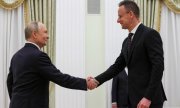
According to an investigation by the Washington Post, the Hungarian Foreign Minister, Peter Szijjarto, has been passing on confidential information about the EU to his Russian counterpart, Sergey Lavrov. The newspaper also says that the Russian foreign intelligence agency, the SVR, is backing the Orbán government in the current election campaign. Budapest vehemently denies the allegations. The EU Commission has demanded an explanation. Europe's media call for decisive action.
Heavy sanctions if re-elected
The Telegraaf is sick to the teeth of it:
“Of course it is up to the people to decide whether they want to continue with this charlatan or not. But if this is the case, Brussels must not fail to take decisive action. Unfortunately, it will be virtually impossible to expel the country from the EU in the short term. But Brussels should finally show some backbone by tightening the financial screws on this net beneficiary, which behaves as though the EU were nothing but a cash machine for Hungarian needs.”
Tackle the root of the problem
A wait-and-see approach will not suffice, warns Helsingin Sanomat:
“One solution that has been put forward is to switch to qualified majority voting in foreign and security policy, but this process has been deemed difficult. It would require a unanimous decision to waive the right of veto. In other words, Hungary would have to surrender its own means of exerting pressure. Moreover, whilst qualified majority voting is necessary, it doesn't solve the trust problem. A qualified majority won't prevent someone from leaking information. Hungary is ruthless, but the other countries are remaining passive instead of forcing Hungary to resolve the problem. The EU is playing for time. But the elections in Hungary won't automatically provide the solution.”
Tolerate or oust the troublemaker?
For El Mundo, the other EU member states face a difficult decision:
“If it is confirmed that Hungary is passing on confidential information to Russia, Orbán could be excluded from the European Council's decision-making process. This would undermine Hungary's veto against any measures detrimental to Putin. … The fundamental question remains: what makes more sense – tolerating a head of state who serves a foreign, hostile power or ousting him, which could increase his dependence on the aggressor? One thing is certain: if Europe wants to be a relevant and respected geopolitical player, it must effectively defend its sovereignty and its principles against those who attack it.”
EU membership at stake
Retired diplomat György Tatár describes Orbán's intentions in Népszava:
“What is really at stake in the April election – something the government is not discussing, at least publicly – is Hungary's EU membership. ... In Orbán's view, Brussels is exerting heavy pressure on us to ensure that we, too, join the ranks of the warmongers by providing money, weapons and even by sacrificing our children. ... Orbán's rhetoric has already laid the groundwork for him to propose withdrawal from the EU if he wins the election, citing it as a necessity 'in the new situation' and the only way to maintain peace and stability and to avoid war.”