
Sudan conference in Berlin: will this aid package be enough?
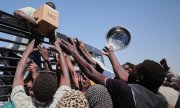
At an international conference in Berlin on Wednesday, aid commitments to the tune of 1.5 billion euros were agreed for Sudan, which for the past three years has been ravaged by a brutal civil war. According to UN estimates, 34 million people, or two-thirds of the population in the northeast African country, are dependent on humanitarian aid. The media debate the causes, consequences and possible solutions to the famine.
No alleviation of suffering without ceasefire
The Tages-Anzeiger has little hope:
“Will the international community finally find the will and the energy to put the warlords in their place? Let's just cut to the chase: this is not going to happen. The warring parties have not been invited, which means there can be no negotiations on a ceasefire. The meeting has other objectives: a push for humanitarian aid in order to alleviate the suffering. This is important. But at the same time, the best way to alleviate suffering is to start with a ceasefire. And that is nowhere in sight. So Sudan will continue be the stage for the world's largest displacement and famine crisis.”
Don't abandon the people
Deutschlandfunk welcomes the fact that the conference focused on civil society representatives:
“However divided they may be among themselves, civilian politicians and the many local aid organisations are the only hope for a better future for Sudan. ... It's true that without the military, Bashir's overthrow [in 2019] would probably never have succeeded .... Yet the international community subsequently made the mistake of continuing to rely on the generals as indispensable partners. ... It's clear that this war cannot be brought to an end through conferences and humanitarian aid alone. ... But without this bandage, the population would suffer even more. The Sudanese don't deserve that.”
Justice cannot be postponed
The UK, Germany, Ireland, the Netherlands and Norway have formed a coalition for the prevention of atrocities and the promotion of justice in Sudan. It should get to work immediately, stresses human rights activist Mohamed Osman in a guest column for the Frankfurther Rundschau:
“By fully supporting the International Criminal Court's investigations into Darfur, by putting pressure on Sudan to hand over the suspects without delay, and by advocating for the extension of the Court's jurisdiction to the whole of Sudan. ... Accountability can not be treated as the final, still unwritten chapter in the Sudanese tragedy. It must come first, so that there can be an end to the tragedy at last. The lesson from the years of war, loss and destruction in Sudan is clear: if justice is delayed further, the people's suffering will only increase.”
Self-serving interference by outside nations
Not only the Sudanese are to blame for the suffering, emphasises The Times:
“No one in Sudan can remember a time of peace. Ever since independence from joint control by Britain and Egypt, Africa's largest country has been racked by coups, repression, dictatorship and civil conflict. ... Sudan is a test of the aspiration by the African Union to promote peace and stability across the continent. It is one that it has comprehensively failed. What has made the conflict so intractable, however, is the self-serving interference by outside nations hoping to profit from arms sales, political advantage and the exploitation of Sudan's vast potential oil and mineral reserves.”
Underestimating the impact for Europe
The crisis in Sudan cannot be ignored, La Tribune de Genève warns:
“We are underestimating the effects of events in Sudan. After all, ongoing destabilisation in the region will inevitably create migration pressure on Europe. Even if the Strait of Hormuz is the focus of interest right now, another key maritime transport route is affected here: the Red Sea. Russia is currently attempting to set up a naval base in Sudan. If this were to succeed, it would give them a significant advantage in monitoring shipping traffic to and from the Suez Canal. So let's not turn a blind eye.”