
Scandal in Portugal: who snubbed parliament?
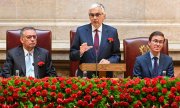
The president of the Portuguese parliament, José Aguiar-Branco, caused a furore during a parliamentary ceremony marking the anniversary of the Carnation Revolution. He made a speech in which he complained that politicians were now required to disclose every detail of their private lives. Socialist MP Pedro Delgado Alves saw this as mockery of the parliament's ethical rules and demonstratively turned his back.
Downplaying evils
The speech deserved Alves' act of protest, Público states:
“Delgado Alves' behaviour may have been somewhat gauche and even rude. But by turning his back he drew attention to a serious problem: José Pedro Aguiar-Branco's speech. … It's one thing to point out that politicians are poorly paid and the target of populist rhetoric – this is true. But it's quite another to downplay conflicts of interest and revolving doors in politics, one of the worst evils plaguing this country. Aguiar-Branco mixed everything up in his speech. Delgado Alves' turned back did far more for the honour of parliament than the speaker's blunt words.”
Don't trivialise transparency
Aguiar-Branco made no distinction between ethical obligations and privacy rights, criticises Correio da Manhã:
“Aguiar-Branco did this deliberately when he cited grotesque examples of alleged reporting obligations that are not enshrined in any law. Worse still, he tried to portray the demand for transparency as an extravagance – and all those who champion it as fools. What he forgot, however, is that transparency is a cornerstone of the democratic rule of law. And that it serves as an important yardstick for measuring the quality of democracies, particularly those which, like Orbán's Hungary, do not meet the essential criteria for receiving European funding.”
No one has absolute moral authority
Diário de Notícias accuses Alves of overreacting:
“Did he feel offended by the speaker's words? If so, he should have simply refrained from applauding, remained seated, and exercised his right to criticise later. … A free society is also a society of rules – both explicit and unspoken. If we destroy this common ground, dialogue dies. When one side claims absolute moral authority over the other, compromise becomes impossible – this is how democracy is destroyed. As was the case with Delgado Alves.”