
How to tackle water shortages in Europe?
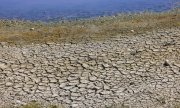
The record-breaking heat in many European countries is also causing significant water shortages. Groundwater and river levels are dropping, the soil is drying out and vegetation is withering. Commentators voice concern, but also make clear recommendations.
Now is the time for a heat turning point
Die Zeit points out that there are certain examples to follow when it comes to dealing with the crisis effectively:
“When Putin attacked Ukraine in 2022 and it became increasingly clear that he was threatening the whole of Europe, then German Chancellor Olaf Scholz announced a 'historic turning point'. EU summits were held, and governments launched defence programmes almost overnight. ... And shortly after tens of thousands of young men attempted to enter the EU via Ceuta in Spain last weekend, the interior ministers convened to discuss the consequences. Europe knows how to act swiftly when it wants to. When it comes to the heat, however, it is reacting very slowly. ... After the 'historic turning point' we need a 'heat turning point' on both a large and small scale.”
No crisis-management concept
Pravda sounds the alarm:
“According to experts, the low water levels in the rivers have not been caused by a lack of rain – as might be expected following a dry winter and an equally dry March, April and June – but by very high temperatures and heavy evaporation. This alarming situation is currently affecting not only Central Europe, which has been hit by an extreme heatwave, but almost all of Europe. ... When it doesn't rain, groundwater reserves run dry. The water supply in Slovakia is at risk in certain regions. No one is really giving it much thought yet. ... Are there any plans for how we should deal with water shortages? So far, there has only been silence on the issue.”
Face the new reality together
The countries of Europe must jointly adapt to this new situation, argues Libération:
“Global warming doesn't merely increase the risk of more frequent devastating fires that destroy a region's ecosystem, or of drought leading to crop failures and watering bans. A constant stream of new events is paralysing the European economy, and the knock-on effects are continuing to unfold at a dizzying pace. ... The phenomenon is no longer exceptional or confined to a single season. It is our new normal. ... And the focus must now be on adaptation and, above all, cooperation, because only a comprehensive and shared vision will help us to come to terms with, adapt to and shape this new European reality.”
Who gets the last few drops?
In the Netherlands, entire sectors such as flower and vegetable growers are having to seriously reconsider their future, warns the NRC:
“Wetter winters and drier summers are making far-reaching adjustments necessary. ... Sectors such as inland waterway transport and cargo handling companies, flower bulb and tree growers, arable farmers and other water users must think about how they can get by with less water – and how they can thrive even during periods of drought. Because once it's time to decide how to allocate the last few drops, it will be too late.”
A barometer of our vulnerability
Delphine Klopfenstein Broggini, member of the National Council of Switzerland for the Green Party, calls for concrete action In Le Temps:
“Water has become a barometer of our vulnerability. The glaciers are melting, droughts are becoming more severe, groundwater reserves are taking longer to replenish and the lakes are warming up. ... We must phase out fossil fuels and invest in public transport, active mobility, renewable energy and energy efficiency. At the same time, we must also prepare our country for the consequences that are already inevitable by protecting our forests and groundwater reserves. ... Working to preserve our water resources will also protect our health, our food security, our economy and our ability to cope with climate change.”
Water conservation now a necessity
The countries along the Danube must rethink their water management policies, Krónika insists:
“The Danube's record-low water levels are not a one-off, abstract or remote natural tragedy, but the moment when our comfortable lifestyle is already coming into direct conflict with physical reality. Water can no longer be taken for granted; it is one of the most important guarantees of survival – in individual, communal, economic and security terms. Water-retaining landscapes, technological adaptation and public awareness of the need for conservation are no longer merely 'green' fads or options, but an indispensable guarantee for our future.”
Drought exposes injustices
Water shortages are exacerbating the inequalities, according to The Guardian:
“Some of the injustices that have come to light in recent weeks are shocking in their predictability. Exemptions allowing golf courses and schools with large sports facilities to continue watering their lawns, whilst local authorities and households are prohibited from doing so, have caused justified outrage. ... Global warming will exacerbate existing patterns of inequality, but will also create new ones. Society and governments must prepare for both. This summer's drought highlights just how urgent this is.”