
After state elections: can Merz keep his job?
In state elections in Berlin and Mecklenburg-Western Pomerania, the CDU has once again suffered major losses. While in the capital Die Linke (The Left Party) emerged as the strongest party, in Mecklenburg-Western Pomerania the AfD will now be the largest group in the state parliament. The CDU didn't even clear the five-percent hurdle necessary to hold seats there. Europe's media examine the results – and the chancellor's chances of retaining his post.
Taking the bull by the horns
Der Standard explains why Merz appeared before the cameras as soon as the first exit poll results were in:
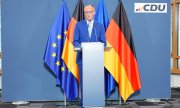
“For days, rumours had been circulating about who might succeed him as chancellor: Hendrik Wüst, the CDU state premier of North Rhine-Westphalia; Markus Söder, the CSU state premier of Bavaria; or Federal Minister of the Interior Alexander Dobrindt (CSU). On Sunday, Merz tried to nip any debate within the CDU/CSU in the bud. Will he succeed? ... On election night, Merz stood alone on stage. Not a single member of the Executive Committee was near him, let alone behind him. Even though he had specifically invited the CDU's leading figures to the Adenauer House for that evening.”
CDU must rid itself of this liability
For the Fidesz-affiliated paper Magyar Nemzet, both the chancellor and the firewall against the AfD are on the verge of collapse:
“Merz could first be removed as party leader in the hope that he will then step down as Chancellor of his own accord. ... Should this lame duck remain in his politically defunct office, the CDU/CSU, which is currently polling at 20 percent, could plunge even further into the political abyss. Sooner or later, however, the survival instinct will kick in even among the CDU's leading politicians. Not least because the members of the party's youth organisation, the Junge Union, are already kicking against the firewall because they sense that they only have a future with the AfD.”
Not the time for a prolonged cliffhanger
In such a situation one can't help but ask if the current chancellor is the right man for the job, Der Spiegel comments:
“If there are forces within the party who wish to see the Chancellor replaced, they certainly cannot be blamed. However, it's high time they came out of hiding and pushed for his replacement. Either that or they should keep their mouths shut. For the country, and for this government, a prolonged cliffhanger in the Chancellery, with Merz's support fading away completely in the autumn, would be intolerable. In the current global situation, Germany, as the EU's most important country, must remain stable and reliable.”
Stabilise Europe with realistic answers
It's not just Germany that is in acute danger, El Mundo warns:
“With the collapse of the political centre, the most radical alternatives on both left and right have gained massive support, making the country even harder to govern and increasing the risk of polarisation in one of the EU's key powerhouses. ... The crisis of the German centre is thus having an impact on the entire continent. ... The election results serve as a warning to the driving forces behind the European project. They must reaffirm their commitment to a firm, reformist programme focused on the needs of the many citizens who feel neglected. Realistic answers to the housing crisis, the rising living costs and the tensions caused by unmanaged immigration are needed.”
Worrying for Ukraine
It's not good news for Ukraine when Merz's position is weakened, explains Mykola Lukaschuk, Speaker of Dnipropetrovsk Oblast Council, on Facebook:
“Why is the political situation in Germany important to us? It is the EU's largest economy, with a GDP of over 4 trillion euros. … And since last year it has been Ukraine's largest military donor. A defeat for Merz's party in these elections could lead to a snap election in the Bundestag. ... And such snap elections are particularly dangerous. This is because the Alternative for Germany – a party that wants to resume importing Russian gas and opposes financial aid for Ukraine – is currently leading in the polls. The next Bundestag elections are due to take place in 2029. It would be better if things stayed that way.”
At least no AfD governments for now
The Economist seeks out the silver lining:
“There were some bright spots for centrists. Not long ago the AfD was hoping for a far bigger win in Mecklenburg-Vorpommern, and perhaps even a small one in Berlin, given its fractured electorate. Instead the AfD was given a serious scare by the surging SPD in 'Meck-Pom', and in Berlin it underperformed its polling. Alice Weidel, the AfD's co-leader, insisted that voters had given her party a mandate to rule in Mecklenburg-Vorpommern. But the fact is that it will not govern either there or in the capital ... However you cut it, German politics is fragmenting, fraying and radicalising.”