
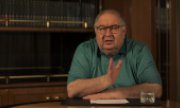
Russia sanctions lifted for two oligarchs
The EU has agreed at the last minute to extend the current sanctions against Russia – which target around 3,000 individuals and organisations – for another three years. However, at the instigation of France, Luxembourg and Slovakia, two oligarchs, Alisher Usmanov and Mikhail Fridman, have been removed from the list. Kyiv is outraged. Europe's press is incensed.
Mavericks undermining a resolute stance
Europe's supposed unity is a very fragile construct, laments De Volkskrant:
“Since Viktor Orbán disappeared from the scene, it has become clear that – from the fearful Belgians to the self-centred Greeks and the pro-Putininsts like Slovak Prime Minister Robert Fico – Europe's supposedly resolute stance vis-à-vis the instigators of the great European war is at times very shaky and fragile. A key factor here is that many Europeans are increasingly at odds over what comes next. ... This comes across as blind panic, which will only encourage Putin to step up his war against Ukraine.”
Sanctions as a bargaining chip
In a Telegram post republished by Echo, lawyer Anastasia Burakova writes:
“The purpose of targeted sanctions is not to punish someone but to compel them to stop supporting the war machine, its financial sources and the political leadership of a country that is committing an act of international aggression. ... Have Usmanov and Friedman ceased to meet these criteria? No, they continue to do this. And this is a very, very bad decision. It shows the Kremlin and those close to it that the instrument of sanctions is ceasing to be a legal and political issue and becoming a bargaining chip instead.”
Macron no better than Le Pen
Sergei Metlev, editor-in-chief of Postimees, is dismayed:
“The weak, self-serving and morally confused governments of Luxembourg and Slovakia are behaving just as one would expect them to. But France, the major nuclear power, the pioneer of European unity and support for Ukraine – why? ... In light of such actions I am hardly worried about the interests of our region under a President Marine Le Pen – the very same Le Pen who, before the war, was hesitant about criticising Russia. Macron is already harming these interests by chasing after some arbitrary, confused objective.”
Paris playing into Moscow’s hands
France has acted against its allies' interests, La Stampa criticises:
“Behind this lies a sensational spy story in which France, the supposed champion of European integration, has effectively played into Russia's hands for reasons of 'national interest'. Paris interceded on behalf of the two Russian billionaires to facilitate the release of two French citizens who had been arrested in Baku, Azerbaijan. The deal was basically that Baku – which is very friendly towards Putin – release the two French 'hostages' while Paris worked within Europe to have the sanctions [against Usmanov and Fridman] lifted. ... France has thus swept aside the resistance from the Baltic states. More petitesse than grandeur.”
Money counts more than principles
Opposition politician Yulia Navalnaya's has scathing words in a Telegram post republished by Echo:
“Apparently it makes no difference to Europe whether you support the war or not, whether you're on Putin's side or against him. Ultimately, what really seems to matter is how much money you have in your bank account. But if you've fled Russia, the situation is entirely different: you can't be granted a visa, you can't open a bank account, and many obstacles are placed in your way. ... Thanks to you, EU, for reminding us once again that in the world of high politics money still counts for more than principles, and that the fate of ordinary people lies somewhere at the bottom of the list of priorities.”