
How will the Kraków attack change Poland?
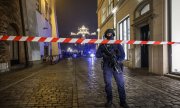
Poland is in shock after an attack in the centre of Kraków. On Saturday afternoon a 24-year-old man opened fire on passers-by from inside his car, killing six people and injuring a further sixteen. The gunman was seriously wounded in a shootout with police and died in hospital on Monday morning. The public prosecutor's office has classified the incident as a terrorist attack.
The country has lost its innocence
The attack marks a turning point for Poland, writes Michał Szułdrzyński, deputy editor-in-chief of Rzeczpospolita:
“Until now, such an attack had been unimaginable to us. We would board a bus or enter the underground and be absolutely certain that, barring some random accident, we would reach our destination safely. Today we must realise that attacks will change our lives and our perception of public safety. The images from Kraków show us that we as a society have no idea how to behave in such crisis situations. ... The world as we knew it is now a thing of the past. When I think back to the carefree youth I spent in Kraków’s Main Square, I know it won't be easy. But we have no other choice.”
Vigilance matters
Polish society must adapt to the new threats posed by such persons, Polityka argues:
“The lesson that Western European cities have learned from such attacks – the likes of which we had not experienced before here – is the need for increased surveillance and security in crowded places. ... But a far more important task must be assumed, not so much by the security services as by society as a whole. It is impossible to station an armed police officer outside every block of flats. It is impossible to search every vehicle's boot. It is impossible to cordon off every street leading to every market square. And it is impossible to ban radical propaganda from the internet, which is controlled by transnational corporations over which the authorities have practically no influence.”
Political divides evident once more
The Frankfurter Allgemeine Zeitung notes that the initial reactions already showed just how polarised Poland is:
“The right-wing camp centred on the opposition party PiS and President Karol Nawrocki has been launching excessive rhetoric attacks against Donald Tusk's government for days. Over the weekend, wild conspiracy theories about the attack in Kraków were circulated from within this milieu. ... This week, on 11 November, Poland marks the anniversary of the 1918 Declaration of Independence. For years now this has no longer been a public holiday that unites Poles but a symbol of the country's internal division. ... It is to be hoped that the shock caused by the attack in Kraków will have a cooling effect on the political passions ahead of this date.”
Disinformation serves Russia's interests
Immediately after the attack, false information circulated online claiming that the gunman was Ukrainian. Journalist Mihai Isac comments in Contributors:
“The lie about the attacker's nationality was meant to shift the blame onto an entire community. A single crime is turned into an accusation against Ukrainian refugees and against support for Kyiv. ... Real pain is projected onto a fabricated guilt. People are expected to become angry before they even know the facts. Once this version takes hold, the truth is already competing with fear, and Russia's aggression disappears from the narrative about who poses a threat to Europe's security.”
True grit
Tygodnik Powszechny praises the two police officers who overpowered the gunman:
“In such moments, in such situations, what constitutes true heroism and risk-taking and what is merely an imitation of them becomes very clear. ... We owe these two officers the utmost respect and our deepest gratitude. In our day-to-day lives, we are completely unaware of the role these people actually play. What sacrifices they make in their jobs, and what their work really entails. Days like today make this crystal clear to us. And they put things back into perspective – or at least they should.”