
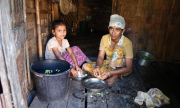
Myanmar: first state convicted of genocide
The International Court of Justice (ICJ) in The Hague has classified Myanmar's crimes against the Rohingya Muslim minority as genocide. The ruling relates to the 2017 military offensive during which troops committed mass killings and rapes. In this South-East Asian country the Rohingya people have been oppressed and persecuted for decades. What does the ruling signify?
Greater clarity
The ruling will have far-reaching consequences for other trials of this kind, comments Der Tagesspiegel:
“In particular for the ongoing proceedings against Israel. ... And that could already be causing unease. Because the court's reasoning has shown that it is indeed possible to prove intent without a written plan for extermination. ... The judges also made clear which counter-arguments they considered inadequate: for example, Myanmar's claim that the attacks were necessary to combat terrorist groups. Given the unproductive and polarising debates surrounding the concept of genocide, it is good that the ICJ has now, with this ruling, brought more clarity regarding what comes or may come under this legal definition – and what does not.”
A more flexible approach
International legal expert Ioannis Konstantinidis writes in To Vima:
“The evidence on which the ruling is based is of particular significance. In the cases concerning the former Yugoslavia, the International Court of Justice relied on findings of fact by the International Criminal Tribunal for the former Yugoslavia. In this case, however, it assessed the work of the UN in detail. This could strengthen the evidence base of such mechanisms. The judgement will inevitably also be examined in the context of other genocide cases. While it does not predict their outcome, it does establish a particularly significant legal precedent. Its historical significance therefore lies not in a new definition of genocide, but in something more subtle: a more flexible approach to proving genocidal intent.”