
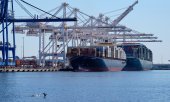
The face-off in the tariff war between the US and China continues. First US President Donald Trump progressively increased the additional tariffs on Chinese imports to 145 percent. Then he announced temporary exemptions for the large electronic goods sector. Beijing has retaliated with counter-tariffs which are currently at 125 percent, and is also seeking economic alliances in other countries.

Just under a month before the early parliamentary elections on 18 May, the conservative Portuguese minority government has presented new figures pointing to a significant increase in immigration, with immigrants currently making up around 15 percent of the population. Commentators caution against an instrumentalisation of the issue.
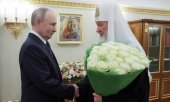
In reaction to the Russian Orthodox Church's support for Russia's war of aggression against Ukraine, the Estonian parliament has passed a law stipulating the separation of the Orthodox Church of Estonia from the Moscow Patriarchate and making the right to vote in municipal elections a prerequisite for membership of the clergy. This right to vote was recently withdrawn from residents with Russian citizenship.
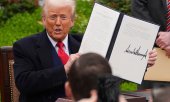

US President Donald Trump has announced a massive additional package of tariffs. In addition to a flat rate of 10 percent on all goods imported into the US, variable tariffs set at 20 percent for the EU and 34 percent for China will apply. As share prices plummet on the international stock markets, Europe's press debates how hard the blow will be and how it can be countered.
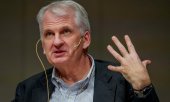
Three Yale professors, historian Timothy Snyder, Eastern Europe expert Marci Shore and fascism researcher Jason Stanley, have announced that they are leaving the US and moving to the University of Toronto, citing concerns over the political and social climate in the US. European academic institutions are also receiving an increased number of requests for positions from US scholars.