

The president of the Hellenic Basketball Federation, Vangelis Liolios, has been arrested on suspicion of bribery and match-fixing. Arrest warrants have also been issued for several referees. Liolios has stepped down from his post but denies the allegations. Around 50 matches are under investigation, with the alleged irregularities dating back to 2016. The Greek press discusses the scandal.

The conservative Partido Popular (PP) and the far-right Vox have agreed to present joint lists of candidates in a bid to secure a right-wing majority in the upper house of the Spanish parliament, the Senate, in the run-up to the general election. Under the deal, Vox will refrain from fielding its own candidates in 14 provinces and instead place an independent candidate on each of the PP's lists. In exchange, the PP will stand aside in three constituencies.

Israelis elects a new parliament today. Following the devastating Hamas massacre on 7 October 2023 and three years of war, a deeply polarised country will decide which direction its politics take. According to polls, it looks set to be a close race between Benjamin Netanyahu's right-wing religious bloc and the more moderate opposition alliance led by Gadi Eisenkot, former chief of staff of the Israel Defence Forces.

Luiz Inácio Lula da Silva has narrowly won the presidential election in Brazil. His victory against Flávio Bolsonaro is making waves across the globe. How will Lula's fourth non-consecutive term impact relations with the US, Europe and China? And what does his re-election mean for global climate action? The international press sizes up Brazil's future role in global politics.
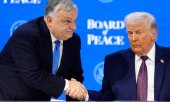
According to a report in the Wall Street Journal, the Trump administration is pushing former Hungarian prime minister Viktor Orbán as a candidate for the post of UN Secretary-General. There is speculation that Orbán could even be nominated as a joint candidate by the US, Russia and China. The reports have sparked a lively debate among commentators in Hungary.
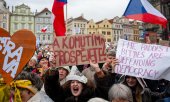
The Czech Republic's governing parties passed a bill on Friday night reforming the funding of the country's public service broadcasters. Under the new legislation, radio stations and TV channels will see their funding cut by 15 percent – and the money will no longer come from licence fees but from the state budget. The opposition has described the reform as an attack on freedom of expression and protests have been held in Prague and other cities.

A serious security vulnerability in the PHP programming language has set off alarm bells worldwide. Government agencies, hospitals and universities have taken their websites offline as a precaution, while cybercriminals have made millions of attempts to exploit the vulnerabilities. Around 70 percent of the world's websites use PHP. Commentators discuss the role of AI in both detecting and exploiting such security flaws.
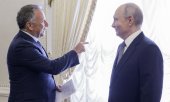
Following the meeting between Vladimir Putin and US Special Envoy Steve Witkoff in St Petersburg, talks between Russia, Ukraine and the US are set to resume. However, Witkoff describing Putin as a "humanitarian" during the meeting has drawn criticism even from US Republicans. The press looks at who stands to benefit from Trump's attempts at mediation.
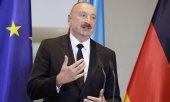
Relations between Turkey and Azerbaijan appear to have deteriorated sharply. A speech delivered at a party conference in which President Ilham Aliyev emphasised his country's independence has been interpreted as an attack on Ankara. A ban on headscarves in Azerbaijani schools has met with sharp criticism in Turkey, and now Baku has imposed entry bans on 31 Turkish nationals.
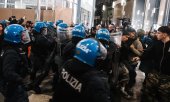
School pupils and university students are taking to the streets in France, and protesters rioted and looted businesses in Milan, prompting Italy's Prime Minister Giorgia Meloni to deploy troops to the city. High rents, social inequality and a lack of prospects are fuelling discontent. Commentators look at whether politicians should crack down further or introduce reforms to address the problems of the younger generation.
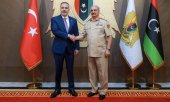
Libya's eastern parliament has unanimously approved the maritime border agreement that the Government of National Accord signed with Turkey in 2019, five years after rejecting it in 2020. This means it is now recognised by both parts of the country. The European Commission does not recognise the deal, which redefines territorial boundaries, and has backed Greece and Cyprus, which consider the agreement unlawful.

According to media reports, the VW Group is planning a five-year wage freeze in the face of significant overcapacities and weak sales figures. Its 660,000 employees across the globe fear further cuts as a result of the austerity measures, and trade unions are threatening with strikes. Europe's press debates whether VW CEO Oliver Blume's tough measures are necessary or will only exacerbate the carmaker's problems.