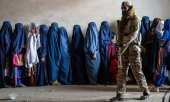
For the past five years the Taliban have again been in power in Afghanistan. The leadership held a ceremony to mark the occasion outside the former US embassy, but the majority of the population has no reason to celebrate: millions are starving and women are being systematically excluded from public life and education. Now they are not even allowed to sing. Meanwhile, several EU countries have begun deporting refugees back to Afghanistan again.
Russia's invasion of Ukraine has stalled on the ground – and the war is taking an ever bigger toll on the Russian economy. Meanwhile, Kyiv claims to have recaptured 745 square kilometres of Ukrainian territory since the start of the year. Against this backdrop, talk of a new mobilisation is growing louder in Moscow – although this is unlikely to happen before the Duma elections in mid-September. What would the impact be?
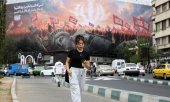
The US is apparently now relying on economic pressure rather than military action to force Iran to make concessions. The Strait of Hormuz, a vital connection for the global economy, remains blocked. US Vice-President JD Vance has said that lowering oil prices is now the main objective in the war with Iran. Commentators discuss the US's weakened position.
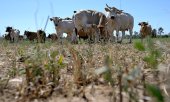
Dry soil, withered plants, meagre harvests and not enough feed for livestock: the heat and droughts of this record-breaking summer are taking a heavy toll on agriculture in Europe. Many farmers are already reducing their livestock numbers as a result. The media ask whether government aid can be a lifeline and how the agricultural sector can adapt to climate change.
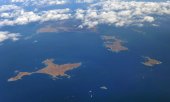
Russian President Vladimir Putin's visit to Iturup (Japanese: Etorofu), one of the four Kuril Islands in the North Pacific, has sparked fierce protests in Japan. Both Tokyo and Moscow lay claim to the islands, which were occupied by the Soviet Union in the closing stages of the Second World War and have been under Russian administration ever since. According to the Russian state news agency Tass, this was Putin's first trip to the Kuril Islands. Commentators take a closer look.
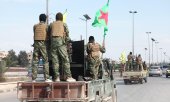
On Monday, the Turkish Parliament passed a law aimed at ending the decades-long conflict with the banned Kurdish Workers' Party (PKK). However, the legislation will not come into force until the PKK has been fully disbanded and disarmed. Imprisoned PKK members may then be pardoned and released. Commentators remain sceptical.
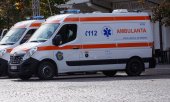
Seven people in Romania are under investigation for allegedly attacking an ambulance crew with clubs, axes and stones. The incident was prompted by fake reports on TikTok according to which gangs disguised as ambulance crews were abducting children. The reactions in Romanian media range from anger to calls for effective action.

For the first time in 20 years, Europe witnessed a solar eclipse which was total in some parts of the continent yesterday. Equipped with special glasses, cameras, and picnic baskets, millions of people gathered to experience this celestial spectacle. Commentators in Europe's media take an unusually philosophical view of the event.
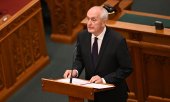
András Baka was elected by the Hungarian parliament with the Tisza Party's two-thirds majority as the country's new president on Tuesday. Former prime minister Viktor Orbán's Fidesz party – which is now in the opposition – claims the election was illegal because Baka's predecessor, Tamás Sulyok, was removed from office by a constitutional amendment. The press focuses on the future and what a new constitutional system will bring.
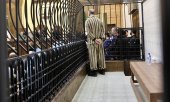
A court in Damascus has sentenced Syria's former president, Bashar al-Assad, to death in absentia. He was charged with premeditated murder of multiple people, torture, arbitrary imprisonment, crimes against humanity and war crimes. Assad and his brother Mahir, who was also sentenced to death, fled to Russia in December 2024. At present there is no indication that they will be extradited.