
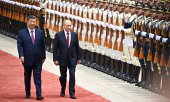
A meeting between Donald Trump, Vladimir Putin and Xi Jinping could take place in China on the sidelines of the Asia-Pacific Economic Cooperation (APEC) summit in November. The plan has stoked fear in Europe that these major powers will conduct negotiations without consulting Ukraine and its allies. Commentators discuss the dangers of a redrawing of spheres of influence and the consequences for European security.
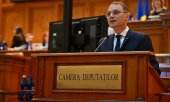
After three unsuccessful attempts, the independent diplomat Luca Niculescu was elected as Romania's new prime minister on Tuesday. In the parliamentary vote in Bucharest, 280 MPs voted for the 55-year-old and 58 against. He will now head a minority government, with 12 of the 18 ministerial posts going to the Social Democratic Party (PSD) and 6 to independent technocrats.

At least seven merchant ships have reportedly been attacked by drones in the Black Sea off the coasts of Romania and Bulgaria in recent days. It is not yet clear who is behind the strikes, which are fuelling concerns about a further escalation of the war in Ukraine and jeopardising key trade routes. Europe's press discusses how Nato and Turkey should react and whether the Baltic will be the next target.
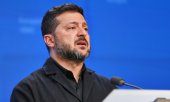
US President Donald Trump has levelled new accusations against Ukrainian President Volodymyr Zelensky, saying that the US has "given Ukraine a lot – they've given us nothing" and that Zelensky was "no real help" in the peace efforts. The Ukrainian President had complained about a lack of support from the US. The press wonders whose interests are being served with these comments.

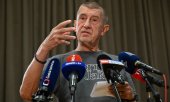
Prime Minister Andrej Babiš's ruling Ano party has suffered a crushing defeat in senatorial and regional elections in the Czech Republic. The party failed to retain a single Senate seat and has lost support across the country. The result comes as a blow to Babiš, who had campaigned on the strength of far-reaching election pledges. The Czech press discusses causes and consequences.

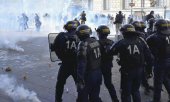
There has been another wave of school protests across France. According to official figures, 160,000 people took to the country's streets on Tuesday. The organisers put the figure at 480,000. Access to numerous universities was also blocked by the demonstrations. Further protests in which university students and trade unions also intend to take part are planned for Saturday. Europe's press looks at the reasons for the protests and why they are spreading to other sections of the population.

The scandal-hit US Ambassador to Greece, Kimberly Guilfoyle, has resigned at Donald Trump's request amid allegations that she suggested in Athens that Washington could topple governments in the region if they refused to buy expensive US liquefied natural gas. Shortly afterwards, Prime Minister Ilie Bolojan's government in Romania collapsed.
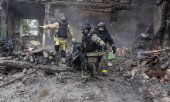
Relations between Donald Trump and Volodymyr Zelensky have once again cooled: early this week the Ukrainian army's access to US data on Russian missile launches was restricted, which delayed the triggering of air raid sirens. The functionality of Starshield – the military version of the satellite-based internet service Starlink – has also been limited. Europe's media draw their own conclusions.

Without explicitly mentioning headscarves, the Azerbaijani government has passed a decree that bans religious clothing in state schools, on the grounds that it contradicts the principle of secularism in the education system and undermines school uniform rules. The ban has led to protests and violence in Baku. In Turkey, too, it is being sharply criticised, especially by government supporters there.
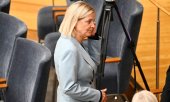
More than a month after the general election in Sweden, the bid of the Social Democratic Party leader Magdalena Andersson to be elected by the Swedish parliament as Prime Minister failed on Thursday. Given that the Swedish constitution imposes a limit of four proposed PM candidates, the national press speculates on whether it could come to a snap election.