

France may follow Australia's example and introduce a ban on social media for children and young teenagers after its National Assembly voted in favour of a bill to this effect. If approved by the Senate, the ban could apply to children under 15 from this September. President Emmanuel Macron has enthusiastically endorsed the draft law. While many commentators applaud the move, some present alternatives.
Even before the tug-of-war with Washington over Greenland, Europe was pondering whether and how it could take its military security into its own hands. Nato Secretary General Mark Rutte has now dismissed such ideas with the words "keep on dreaming", stressing that Europe cannot defend itself without the US. Commentators take stock of the security situation on the continent.
The Spanish government has approved a plan to grant legal status to hundreds of thousands of people without valid residence permits. The regularisation, which is to be enacted by decree, applies to migrants who entered the country before 31 December 2025, have been living in the country for at least five months and have no criminal record.
Representatives of the Russian opposition are now also members of the Parliamentary Assembly of the Council of Europe (PACE). A total of 15 Russians and representatives of ethnic minorities living in exile are to participate in the assembly's Platform for Dialogue with Russia's Democratic Forces. Russia was expelled from the Council of Europe in 2022 following its attack on Ukraine.
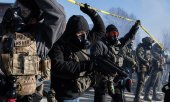
Agents of the Immigration and Customs Enforcement (ICE) agency have shot and killed a person in Minneapolis for the second time within a month. According to the US Department of Homeland Security, the officers were acting in self-defence. However video footage broadcast by US media shows no evidence that the victim, intensive care nurse Alex Pretti, had threatened them with a weapon. Europe's media fear a dangerous spiral of violence.
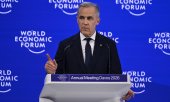
At the World Economic Forum in Davos, a speech by Canadian Prime Minister Mark Carney attracted particular attention when he declared the end of the old rules-based order and the "beginning of a harsh reality". Carney explained that middle powers must join forces to act together against threats from the major powers. Commentators also see the need to act.

Every year on 27 January the victims of the Holocaust are commemorated. Although there are ever fewer eyewitnesses who can give personal testimony about the mass murders committed by the Nazis, numerous events are held to help keep the memory alive. Efforts to educate people about the past must be redoubled, commentators urge.
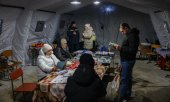
Massive Russian air strikes on Ukraine's energy infrastructure have left hundreds of thousands of people without electricity or heating in freezing temperatures. According to the government, 1.2 million households are currently without power. What is Russia trying to achieve with its unremitting attacks on energy facilities?
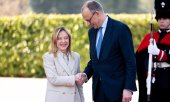
Germany and Italy plan to work more closely together. During German Chancellor Friedrich Merz's visit to Rome on Friday, he and Italian Prime Minister Giorgia Meloni signed agreements on closer cooperation in the areas of security, migration and defence, and announced joint initiatives in economic policy. Commentators speculate on where this could lead.

Following the meeting between US President Donald Trump and Nato Secretary General Mark Rutte, details have emerged regarding the potential terms of a new Greenland agreement. According to media reports, it would include additional military bases under US sovereignty, a bigger security policy role for European states and the planned US missile defence system 'Golden Dome'.

The founding document for the Board of Peace initiated by US President Donald Trump has been signed on the sidelines of the World Economic Forum in Davos. According to the charter, the Board's mission is to resolve conflicts in parallel to the United Nations. Hungary and Bulgaria are the only EU member states to have joined the controversial organisation so far. The media weigh in.

The upper house of the British Parliament has voted to introduce a social media ban for children and teens under the age of 16, following Australia's example. The vote was initiated by Conservative member of the House of Lords John Nash, who stressed that "the future of children must come first", and will increase the pressure on Prime Minister Keir Starmer to enact a social media ban. The British press takes stock.