
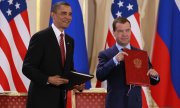
End of New Start: a new nuclear arms race?
Today marks the expiry of the New Start nuclear weapons treaty which was concluded between the US and Russia in 2010 to limit the number of strategic nuclear weapons in their possession. At the time, both sides agreed on a maximum limit of 1,550 warheads and 800 delivery vehicles. In September, Russian President Vladimir Putin offered to extend the treaty for another year, but US President Trump didn't accept the proposal.
Little chance of a follow-up treaty
Trump has promised a new agreement that would include China, but Der Standard is sceptical:
“International arms control treaties require years of preparation and trust built through mutual monitoring. Both are already in short supply, and this is being exacerbated by Trump's volatility. The Kremlin's almost weekly nuclear threats are making the situation worse. And Trump has proven unable to use his supposedly good relationship with Putin to force China to the negotiating table with Russia's help. Without New Start and a follow-up agreement, a gap is opening up in which there will be no effective self-regulation by the states. A new nuclear arms race is looming.”
Growing risk of proliferation
Le Monde warns:
“The burial of New Start heralds the dawn of a new era of nuclear deterrence, and that is worrying. It could encourage both horizontal proliferation, meaning an increase in the number of countries with nuclear weapons, and vertical proliferation, marked by an increase in the size of their respective arsenals. ... This new era is accompanied by the relativisation of what was long considered taboo. Vladimir Putin's irresponsible threats to use tactical nuclear weapons against Nato countries in the context of the war in Ukraine are evidence of this.”
A new era of nuclear brinkmanship
The Irish Times also frets:
“There were around 70,400 warheads in 1986, compared with 12,500 today - a reduction that came from years of continual negotiations between Washington and Moscow. ... Increased proliferation of nuclear weapons to states like North Korea, Pakistan and Israel has introduced new uncertainty and risk. ... Trump's planned Golden Dome missile defence system also threatens to diminish the deterrent effect of Russian and Chinese nuclear weapons, incentivising them to develop new systems to circumvent it. A new era of nuclear brinkmanship is an appalling prospect, but a clear risk.”
Even aggressors cannot want nuclear war
Politiken is frank:
“Allowing the nuclear weapons agreements to expire is the height of idiocy. Certainly, they had many shortcomings, not least of which was that they only covered the US and Russia. But they ensured a minimum level of control and a degree of cooperation that reduced the risk of misunderstandings. Now a new control regime must be established, and the strongmen in Russia, America and China should recognise how important this is. A global nuclear war would have no winners, only losers. Trump, Putin and Xi are all manically fixated on their legacies and the greatness of their nations. All three leaders want to take over other countries' territory and plant their own flags there. But what good is all that if the planet is blown up?”
Europe needs the bomb
Jutarnji list likes the idea of nuclear armament in Europe:
“German Chancellor Friedrich Merz said on 29 January that European countries are beginning to consider the idea of a shared nuclear shield. ... Russian media reacted strongly to Merz's statement, meaning the idea is a good one. Because it thwarts Moscow's plan to use nuclear threats to extort concessions from Europe. ... Defence independence and resilience are crucial for the survival of our unified EU and Europe. Including the nuclear option.”