
Fifa World Cup: is this fair play?
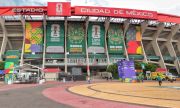
The Fifa Men's World Cup kicks off with the match between Mexico and South Africa today. A record 48 teams will compete in over 100 games across the three host nations: Mexico, Canada and the US. Europe's press notes that many of the organisers' decisions seem at odds with the values that the sport is supposed to embody.
Equal opportunities a foreign concept here
Hämeen Sanomat makes clear:
“Anyone who claims that sport is not political is talking nonsense. This World Cup is also highly political. The host country, the US, and Iran are in the spotlight. The Iranian team is allowed to cross the border to the US side on match days, but otherwise they are based in Mexico and train there, too. The US also objected to Iran's matches being played in Mexico or Canada, even though Iran had proposed this to the US. People like to talk about values in football: about fairness and equality. When it comes to the organisation of this tournament, we're still a long way from the values of the football world. Hopefully, at least on the pitch, the spirit of fair play will prevail.”
Entry ban is event's first red card
Football won't be the only focus in the US, says Hospodářské noviny:
“The main topic will be US entry requirements, because combating migration to protect the country against potential terrorists is Trump's main topic. The Iranian national team, which is based in Mexico, will travel to Los Angeles for the matches, but fans with Iranian passports – like those of three other participating nations (Haiti, Senegal and Ivory Coast) – won't be allowed to enter the country to support them. ... The best African referee, Omar Artan, who was turned back by US border officials in Miami because he holds a Somali passport, knows this only too well.”
A successful integration model
The World Cup can also help refute the anti-immigration rhetoric of right-wing populists, writes Visão:
“Sport can't change the world, but in some cases it helps to explain the reality in which we live. The best football teams are increasingly perfect examples of multicultural integration, where every player knows how to play their part in pursuit of a common goal. … Isolationist populists may know how to play with words, but in truth they understand nothing of the game that really matters: that of development and progress, with opportunities for everyone. Let's hope that for at least a month, as the World Cup unfolds, we can learn this lesson on the pitches of North America.”
Now more exclusive than ever
Denník Postoj takes issue with the commercialisation of the event:
“The combination of strict visa regulations and exorbitant ticket prices makes this event unaffordable for many fans from lower and middle-income backgrounds. Yet football is a sport for the people, and that is precisely what gives it its special atmosphere. For some time now, Fifa's leadership has been acting as if it wants to turn the World Cup into an event for the upper echelons of society. It faces growing criticism that it cares far more about revenue and sponsors than about ordinary fans. The lavish half-time show planned for the final is a prime example of this trend.”
The protests will soon subside
Sadly, the justified criticism will soon fade away once the ball gets rolling, Jyllands-Posten fears:
“Infantino has jumped on Trump's bandwagon, leaving football fans at the mercy of the US president's whims. All for the sake of money and power. Even now, the event has all the makings of an absurd freak show. But we also know that criticism is usually drowned out as soon as the ball starts rolling. That's how it was the last time in Qatar, and that's how it will be in the US too – and most likely the next time the World Cup rolls around in ... Saudi Arabia. That is deeply depressing.”
Ignore the spoilsports
The powerful must not be allowed to steal the limelight from the people's sport, argues Trouw:
“This World Cup belongs neither to Trump nor to the ICE, nor even to Fifa president Gianni Infantino. Too many people love football for it to be taken away from them. ... The people of Cape Verde, Curaçao, Haiti, Ivory Coast, Iran and the Congo are quite rightly proud that their countries have qualified for this World Cup. They will want to celebrate, and one can only hope that they will be able to do so to the full and with great enthusiasm. ... Football is too valuable to be overshadowed by the whims of the powerful.”
Risky stadiums
Webcafé warns that the Trump administration's tougher immigration and entry laws could make life difficult for many fans:
“Although the organising committee has announced that no ICE officers will be present in the stadiums, this doesn't mean that they won't be on standby, ready to intervene at the slightest provocation. ... Amnesty International warns that visitors face the risk of arbitrary arrests and deportations, invasive searches of mobile phones and social media profiles, racial profiling and, in the worst case, cruel or degrading treatment in migrant detention centres.”
A huge Latin American festival
El País looks forward to seeing the Latinos in the stadiums:
“This won't just be a sporting tournament. It will be a World Cup marked by Trump's imperialism. ... A tournament that Trump will probably seek to use symbolically for his own ends and turn into yet another demonstration of power and national greatness – in other words, his own greatness. But the ball always comes first and there is something untameable about football: it never fully belongs to those organising the show. There will be thousands of Mexicans, Colombians, Argentinians and Central Americans in the stands. In many US cities, the World Cup will be experienced as a huge Latin American festival in a country that continues to discuss its identity.”
Already a financial coup
Journalist Rui Almeida writes in A Bola:
“This will be an American-style spectacle, with no guarantee that the key players will be entirely comfortable with the format and the signals it sends. But one thing I don't doubt: financially, the Zurich-based organisation can already declare victory and boast of its success. Never before has a World Cup generated such revenues, commercial commitments, sponsorship and added value. Even now, before the Trionda balls have started rolling, the money is already in the bag.”