
Franco-German FCAS fighter jet project scrapped
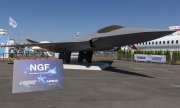
The European FCAS fighter jet project has failed. The German and French governments announced on Monday that the joint development of the aircraft is to be halted. The jet was to form the central pillar of the Future Combat Air System, a key project in European defence cooperation, however Airbus and Dassault, the two companies working on the project, were unable to agree on who should take the lead.
A setback for Europe's defence policy
The Salzburger Nachrichten puts in:
“The demise of this prestigious project worth an estimated 100 billion euros is symptomatic of the fact that many European countries continue to rely on strong national defence industries – even though in the case of the FCAS the failure was due less to a lack of political will than to a power struggle between the two companies Dassault and Airbus. But it is also undoubtedly a setback for Europe's efforts to become more independent of the US in defence policy.”
National interests prioritised
Europe simply isn't up to the task, argues La Vanguardia:
“The scrapped project envisaged a networked combat system revolving around manned aircraft, drones, remotely piloted platforms and a military cloud – the Combat Cloud – to coordinate secure communications between air, sea, land and space platforms. ... The Future Combat Air System exemplifies the limitations and discrepancies in continental cooperation. ... National interests continue to take precedence over a comprehensive strategic vision for Europe. This inability to reach an agreement is a political defeat for the driving force behind Europe, the Franco-German axis, and a harsh reality check for European ambitions regarding defence autonomy.”
No will to compromise
The project was doomed to fail from the outset, argues Les Echos:
“There is no point in lamenting the failure of the FCAS – the problem lay within the project itself. None of the parties involved were ready to compromise. Neither the French aircraft manufacturers, who still believe they can develop their systems on their own, nor the German industrial groups, who don't want to share their government's enormous budgetary efforts for rearmament with others, nor Europe, which no longer dares to tie its funding to cooperation between three or four countries per project. ... And this despite the fact that there has never been a better opportunity to support Europe's defence industry than today.”
Anything else would have been irresponsible
Der Spiegel blames the French side for the fiasco:
“Merz has done all he can to resolve the problems that were already apparent under his predecessor. The German government sought dialogue with Paris, it supported a mediation process, and the chancellor has spoken to Trappier on the phone. The French top manager remained unyielding: he demanded sole leadership of the fighter jet's construction process and control over the use of the project's intellectual property rights. Had Merz yielded to these demands, Airbus would have been reduced to a mere supplier. Germany would have lost its technological capability to build fighter jets for good. That would have been irresponsible in terms of both industrial and defence policy.”
Germany increasingly going it alone
Concerns in France are growing that Germany is turning its back on European projects, columnist Pierre Haski writes in France Inter:
“In Paris there is a perception that Germany is more inclined to go it alone on several industrial issues in the defence sector. ... Among the projects that Germany is tackling alone, despite there being European alternatives, are a constellation of communications satellites and rocket launches. This is less about military power than industrial clout. ... France, which had made its military strength and its defence industry its main asset within the EU, now finds itself challenged by its German partner. It is precisely here that the FCAS takes on strong symbolic significance.”
Parts of the programme still running
For the Neue Zürcher Zeitung the situation is not quite so dire:
“The scrapping of the manned core component of FCAS does not spell the absolute end of the programme as the two partners intend to continue developing elements such as drones and the Combat Cloud, and even to carry on using the FCAS name. Nevertheless this is a severe blow to the European defence industry. Europe is under pressure to reduce its dependence on American air combat systems, but has no independent alternative within reach.”