
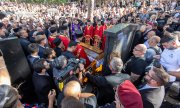
War criminal Mladić buried as a hero
Former General Ratko Mladić, who died in custody in The Hague on 27 August, has been honoured with a state funeral in Serbia. The EU has condemned the ceremony as "glorification of war criminals". Eight thousand Muslim men and boys were murdered in Srebrenica in 1995 at Mladić's behest. Commentators take a critical view of the way Serbia, a candidate for EU membership, is dealing with its past.
EU should distance itself from this Serbia
Nationalism and glorification are dominant forces in Serbia, but there is also another side to the country, writes Balkan expert Alexander Rhotert in the Neue Zürcher Zeitung:
“The period between Milošević's departure in 2000 and the rise to power of Vučić's Serbian Progressive Party (SNS) in 2012 demonstrated that there were – and still are – Serbian politicians who believe in peaceful coexistence and non-violent conflict resolution. Back then, Serbia witnessed a process of liberalisation and democratisation of the state and society, but the nationalist forces refused to withdraw. ... Serbia's government under Vučić is now largely made up of former Milošević cadres and nationalist hardliners. The EU would be well advised to distance itself. The courageous Serbs who have been demonstrating for years against the controlled democracy of Milošević's protégé deserve Europe's solidarity.”
Slow death of international justice
The Times explains why the international outcry over Mladić being given a hero's funeral has been muted:
“Time has blurred the general's crimes. It has been 31 years since Mladic's troops murdered thousands of Muslims at Srebrenica. The credibility of the institutions of international justice, descendants of the ICTY [International Criminal Tribunal for the former Yugoslavia], are under attack, denounced and derided everywhere, not least by the US.”