
Spain: snap election after tenant-protection decrees fail
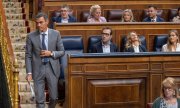
Spanish Prime Minister Pedro Sánchez has called a snap election for 29 November after his minority government consisting of his social-democratic PSOE party and the left-wing Sumar alliance failed to secure a majority for two decrees to protect tenants. In the parliamentary vote on Friday, the separatist party Junts per Catalunya joined the conservative People's Party and the right-wing populist to far-right Vox party in rejecting the emergency legislation. The media saw the snap election coming.
Not the way forward
The measures set out in the Sánchez decrees were not the solution, La Stampa argues:
“Caps on rent increases, compulsory and very long-term lease extensions, compensation and hurdles to landlords reclaiming the use of their property [for their own use]. The predictable response would have been stricter screening of potential tenants, higher deposits, the reclassification of properties for sale or other purposes and reduced investments. Those most penalised would have been young people, mobile workers, immigrants and families without solid references: precisely the groups that politicians claimed they wanted to help. Sánchez has been in government for eight years without having solved the problem, while the logical response to excess demand is to increase supply by building and renovating more homes.”
Junts wants to be kingmaker
La Repubblica takes the Junts party, which holds just seven seats in parliament, to task:
“Today in Spain, the Catalan independence supporters – who are keeping Pedro Sánchez's government afloat – will vote against the housing decree alongside the right, which wants to bring down the Socialist government. Why are they doing this? Because Junts – a minority party in the elections but decisive within the coalition – is taking a gamble. It wants to gain more influence and hold all the cards. It is playing with people's lives. ... What the parties with one, two or a fraction of a percent of the vote want is to be decisive for securing victory: so that they can demand posts, ministries, offices and power.”
Housing crisis the last straw
La Vanguardia had called for an early election even before Sánchez's announcement:
“The defeat suffered by the government in parliament is confirmation that the alliance which supported the formation of the government has collapsed. ... That this defeat is on such a key issue as housing only underlines the political crisis. ... It is therefore only logical that Pedro Sánchez opens up the debate on a new election. ... We must interpret the signals from the public correctly. The discontent across large sections of society is now palpable . ... Inequality is increasing, wages are not keeping pace with inflation, and as a result many people cannot afford to buy a home. The Maricarmen Abascal case has been the straw that broke the camel's back.”
This legislature has long since failed
Even before Sánchez's announcement, El Mundo saw no chance of him staying in power either by holding a general election or by simply carrying on as if nothing were wrong:
“The housing crisis is undoubtedly one of the major challenges Spain faces, but the majority of the population does not trust the government's actions on this issue. There is a consolidated trend of voters shifting towards the political centre and the right. ... It is highly unlikely that there will be a repeat of the surprise that brought Sánchez to power [when his party only came second in the 2023 election but he nevertheless remained prime minister]. Now he faces a choice between bad and worse, in order to bring to a close a legislature that has long since failed.”
Protests as an opportunity
Political scientist Cristina Monge offers Sánchez some advice in El País:
“This wave of indignation could be an opportunity for the left, provided it doesn't degenerate into an exercise in anti-politics. ... If the left wants to mobilise the nearly one and a half million voters who currently abstain, it must engage in a process of public education and put forward concrete proposals for greater justice and social cohesion. ... The failure of the two decrees on housing policy makes it clear that the progressive coalition government no longer has the necessary leeway to push through its policies. Recognising this and acting accordingly could be the key to regaining the trust of those people who once placed their faith in the government and are now mired in disillusionment and a sense of powerlessness.”