
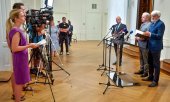
In the Czech Republic, the dispute between the right-wing populist government led by Andrej Babiš and the country's president, Petr Pavel, who comes from the pro-European opposition camp, has escalated again. The government tried to bar the head of state and commander-in-chief of the armed forces from travelling to the Nato summit in Ankara, but Pavel appealed to the Constitutional Court and won the case. The affair prompts the press to reflect on the separation of powers.
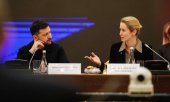
Russia has been waging a full-scale war of aggression against Ukraine since 2022 and so far all attempts at negotiations have failed to end the conflict. Ukraine is currently stepping up its attacks on targets in Russia, and the Russian economy is showing growing signs of weakness. Commentators discuss whether this might be an auspicious moment for Europe to take the initiative in negotiations.
Attempts to form a new government in Romania have failed after the parliament rejected Adrian Veștea, the candidate nominated by President Nicușor Dan for the post of Prime Minister. The previous Liberal government, led by Prime Minister Ilie Bolojan, was ousted at the end of May following a vote of no confidence put forward by the PSD – until then part of the coalition government – together the far-right AUR.
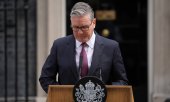
The UK is facing its sixth change of leader in a decade. When Keir Starmer became Prime Minister two years ago, he was seen as a beacon of hope who would bring credibility and stability to British politics and implement numerous reforms. Commentators say that his decision to step down is not entirely due to his personal shortcomings.
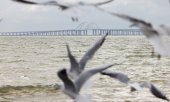
The impact of Ukrainian strikes on supply lines leading to the Russian-occupied Crimean Peninsula is becoming increasingly apparent. Fuel sales have been suspended at times, and road traffic across the Kerch Bridge, as well as ferry services, have been temporarily halted. Tourist numbers are also plummeting. What are the ramifications?
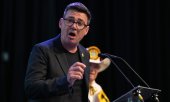
Keir Starmer has announced that he is stepping down as British Prime Minister and leader of the Labour party. He will remain in office until his successor has been chosen. Starmer has been under growing pressure for months, which intensified when his Labour rival Andy Burnham was elected to a parliamentary seat in a by-election last week – thus fulfilling a key prerequisite for taking up government posts. Can Burnham bring stability for his party and the country?
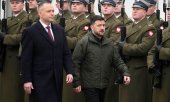
Poland's President Karol Nawrocki has stripped Ukrainian President Volodymyr Zelensky of the country's highest state honour, the Order of the White Eagle. The move was prompted by Zelensky's decision to name a military unit after the nationalist Ukrainian Insurgent Army (UPA), which in Poland is primarily associated with atrocities committed against the Polish civilian population during WWII. The order was awarded to Zelensky in 2023 by Nawrocki's predecessor, Andrzej Duda.
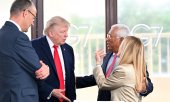
Italian Prime Minister Giorgia Meloni was long regarded as a bridge-builder between the US and the EU, but this changed after Italy refused to allow the US to use its military bases in the war against Iran and US President Donald Trump criticised the Pope, creating a rift between the two leaders. Trump has now claimed that Meloni "begged" him for a joint photo at the G7 summit last week, and that he agreed out of "pity". Meloni has accused the US President of lying.
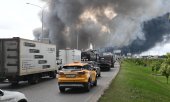
Ukrainian drones struck an oil refinery in Moscow on Thursday. Ukraine's president Volodymyr Zelensky has confirmed the attack, writing on Telegram that it was "a just response to the constant Russian strikes against Ukrainian cities and towns". The oil refinery is one of the largest facilities in Russia and covers a significant proportion of the capital's fuel demands.

The Mayor of Greater Manchester, Andy Burnham of the Labour Party, has won the by-election for a seat in parliament representing the Makerfield constituency. As an MP in London, he can now challenge the embattled Prime Minister Keir Starmer in a leadership election. If successful, he would become the new head of government.
The European Parliament has approved the deregulation of plants developed using genetic editing technology in food production. The new directive will mean that if the plant in question could in theory have been bred in a certain way naturally – i.e., no foreign genes have been introduced – the labelling requirements and most environmental assessments will no longer apply.
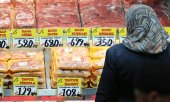
Prices for chicken, an important and affordable staple food, have risen by between 150 and 250 percent in Turkey since the start of the year. The Turkish Competition Authority had already identified a price-fixing cartel in 2025 and imposed heavy fines on 13 poultry companies. Now the Ministry of Justice has placed those same firms under trustee supervision. The national press questions this strategy.