

Belarus's authoritarian leader Alexander Lukashenko released 123 political prisoners on Saturday and expelled them from the country. Among those pardoned were civil rights activist Maria Kolesnikova, former presidential candidate Viktor Babaryko and Nobel Peace Prize laureate Ales Beliatski. The move came after the US announced it was lifting its sanctions against the Belarusian potash industry.
On Tuesday, the European Commission presented new proposals for automotive industry regulations, including an easing of the ban on combustion engines which would allow the registration of vehicles with combustion engines even after 2035 under certain circumstances. Car manufacturers would have to guarantee that the carbon emissions of their new cars are on average 90 percent lower than in the reference year 2021. The move elicits mixed reactions from commentators.

A Hong Kong court has found pro-democracy media mogul Jimmy Lai guilty of "conspiracy to collude with foreign forces" following a two-year trial. The sentence will be handed down to the 78-year-old at a later date. For Europe's media, the verdict highlights the dictatorial nature of the Chinese system.

Investigators are now working on the assumption that the Bondi Beach attack was motivated by antisemitism and that the perpetrators were influenced by the ideology of the terrorist group Islamic State. The two gunmen opened fire on people participating in a Chanukah celebration on Sydney's famous beach on Sunday. Fifteen people were killed and 40 others injured. A glance at the European press reveals just how close Australia is to us.

After two days of talks aimed at finding a peaceful solution for Ukraine, the participants at the meeting in Berlin were optimistic: German Chancellor Friedrich Merz spoke of a "real chance" for peace, saying that the US had offered "considerable legal and material guarantees". And Ukraine's European allies proposed a "multinational force" to secure peace with Russia.

José Antonio Kast has won the runoff election for the Chilean presidency. The right-wing populist secured just over 58 percent of the vote, leaving his communist rival Jeannette Jara trailing behind with around 42 percent. Commentators discuss what the new president's ultra-conservative views portend for the country.
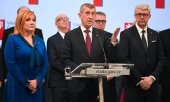
With all ministers sworn in at Prague Castle on Monday, the formation of the new right-wing populist government consisting of ANO, the Motorists' Party as well as Freedom and Direct Democracy (SPD) in the Czech Republic is now formally complete. Commentators discuss how the cabinet under Prime Minister Andrej Babiš will position itself, particularly vis-á-vis Russia and Ukraine.

Following mass protests against the draft budget and corruption, the Bulgarian Prime Minister Rosen Zhelyazkov and his entire government have resigned. "We hear the voices of the people who are protesting against the government," said Zhelyazkov, who formed a minority multi-party coalition government last January. The options now: an attempt to form a new government or snap elections.

"Captured Justice", a documentary by the investigative news platform Recorder, has sparked major controversy in Romania. Garnering millions of clicks on YouTube, the Youtube video shows how judicial proceedings have been delayed and prosecutors and judges stonewalled in numerous corruption cases. Angry citizens have been demonstrating in Bucharest and other cities since Wednesday.

In response to US President Donald Trump's comment that it was time for elections in Ukraine, Ukrainian President Volodymyr Zelensky has said the country is ready to hold elections if the United States and Europe can guarantee its security. Commentators examine the prospects for a fair vote – and see the ball in Trump's court now.

Greece's finance minister, Kyriakos Pierrakakis, has been elected as the new head of the Eurogroup for the next two and a half years. This informal council of economic and finance ministers from the 20 countries of the Eurozone meets once a month to coordinate economic and financial policy. The Greek press sees the nomination as a major success.