People in Kyiv shelter from missile attacks in the basement of a school on February 24. (© picture alliance/EPA/SERGEY DOLZHENKO)

  Russia's war against Ukraine

  15 Debates

Ukraine celebrated the 34th anniversary of its declaration of independence from the former Soviet Union on Sunday - in the midst of a war in which Moscow is trying to regain control of the country. Commentators highlight key moments for a country that is having to fight for its sovereignty like no other in Europe today.

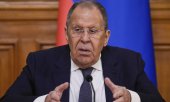
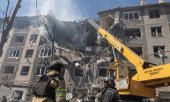
Russian Foreign Minister Sergei Lavrov has said that a peacekeeping operation carried out by European troops in Ukraine would be "absolutely unacceptable" for Moscow and that at this stage a summit meeting between the presidents of Russia and Ukraine would be premature. The Russian military has also intensified its air strikes on Ukrainian cities. Europe's press sees little scope for peace negotiations.

The leaders of five European countries attended Monday's Ukraine summit in Washington, but there were no representatives from Eastern European EU member states. Eastern European media outlets ask why these countries' support for Ukraine and their proximity to the war zone aren't giving them a more prominent role.

Following redoubled diplomatic efforts to achieve peace at the summits in Alaska and Washington, discussions are now focusing on what form the West's security guarantees for Ukraine could take. Europe's commentators look at who can provide support, and in what form, and whether such measures can deter Russia in the long run.

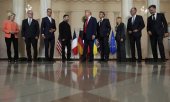
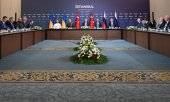
In the wake of the Alaska summit, Ukrainian President Volodymyr Zelensky and the leaders of five European states, the EU and Nato convened with Donald Trump at the White House on Monday to seek a solution to the war in Ukraine. According to Trump, following a phone call with Putin preparations for a meeting between the Russian leader and Zelensky are under way. The press response is mixed.

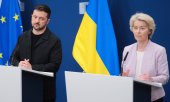
After Friday's summit in Alaska, Ukrainian President Volodymyr Zelensky is travelling to Washington today – accompanied by EU Commission President Ursula von der Leyen and several European leaders – to discuss the future of Ukraine with US President Donald Trump. Commentators review what Europe must do to make itself heard in the White House and the Kremlin.

All eyes are on Alaska, where Donald Trump is meeting Vladimir Putin this Friday - the first such encounter between a sitting US president and the Russian President since 2021. The focus of the talks will be ways to end the war in Ukraine. Commentators alternate between optimism and doubt.

In the run-up to Friday's Alaska summit between Donald Trump and Vladimir Putin, several European leaders participated in a video conference with the US president, laying out key points for possible peace talks, including a ceasefire based on the current front line and security guarantees for Ukraine. The media assess the chances of success.

Ahead of the planned meeting between US President Donald Trump and Russian President Vladimir Putin in Alaska, German Chancellor Friedrich Merz has invited European leaders to a virtual summit. The participating countries - including Ukraine - aim to coordinate a common stance and convey it to the US. Commentators assess the motives of those involved.

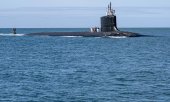
Following a verbal exchange with former Russian President Dmitry Medvedev, US President Trump has announced that he will send two US nuclear submarines to "appropriate regions". The details remain confidential. Prior to this, Medvedev had criticised the US ultimatum to Russia to end the war in Ukraine, saying it was a threat and a step towards war, which Trump in turn described as "foolish and inflammatory". The European press takes stock.

US President Donald Trump has shortened the 50-day deadline he set in July as an ultimatum to Russia and given President Putin just ten more days to agree to a ceasefire in the war against Ukraine. After that, Russia's trade partners could face tariffs of up to 100 percent, he warned. Commentators debate the consequences of the announcement.

Volodymyr Zelensky will restore the independence of Ukraine's anti-corruption authorities. Following fierce criticism from both Ukrainians and his Western allies, the president announced that he would submit a new bill to parliament repealing the regulations passed this week. What conclusions can be drawn from this sudden reversal?