
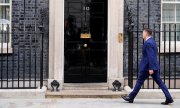
UK: end of the road for Starmer and Brexit?
The race to replace embattled British Prime Minister Keir Starmer has begun: Health Secretary Wes Streeting, who resigned last week in protest against the prime minister, has announced his candidacy for the Labour leadership – and is making the case for rejoining the EU. Greater Manchester Mayor Andy Burnham, who is currently running for a seat in the House of Commons in a by-election, is also a favourite for the job.
Rejoin the EU: from whisper to agenda
Corriere della Sera notes:
“Wes Streeting describes Britain's leaving the EU as a 'catastrophic mistake'. ... 'Britain's future lies with Europe,' he added, and 'one day' it would be 'back in the European Union'. According to Streeting, Labour should promise to rejoin EU in the next election. The former minister's move breaks a taboo in British politics, where silence had reigned on Brexit up to now because no one had been willing to openly question the democratic decision taken in the referendum of 23 June 2016, which confirmed London's exit from the EU.”
A curse on Downing Street
Aftonbladet describes the office of British Prime Minister as a political hot seat:
“Streeting's greatest weakness is that he's not particularly popular. His strength is that Keir Starmer isn't either. But the battle for the premiership is about more than how Starmer has performed. The job seems to have become utterly impossible. If Starmer is forced to resign, Britain will have had seven prime ministers in the space of ten years … You might almost feel sorry for the man. But Starmer can at least take comfort in the fact that it's not his fault. There seems to be a curse hanging over the office of Prime Minister.”
Rejoining no piece of cake
The British would have to accept tougher terms if they were to rejoin the EU, says the Irish Independent:
“It is unlikely the UK would be allowed to rejoin the bloc on the same terms it had before. The UK is likely to have to join the euro if it wanted to return, and it would be unlikely to get the rebate it negotiated previously. ... YouGov polling conducted last month indicated that 63pc of the UK public want closer ties with the EU, and 55pc want to rejoin. However, if it became clear that the UK would be forced to accept a number of terms that it did not have before leaving the bloc, this support is likely to drop significantly.”
Debate plays into Farage's hands
The current debate about rejoining the EU will backfire for the party, Labour politician David Blunkett warns in the The Daily Telegraph:
“There is a clear economic case for greater alignment, but the politics remain toxic. Given that the political parties most favourable to Europe contest an incredibly crowded political niche, any focus on this is, for the moment, suicidal. Which is why focusing on the here and now in the June by-election is critical. ... Otherwise vast swathes of the North and the Midlands would be easy pickings for Nigel Farage. This is not a moment for pandering to particular campaigns, political complexions or easy, trite and populist pronouncements.”
Popular candidate in the starting box
Der Standard sees good chances for Andy Burnham:
“According to Ipsos, two-thirds of the population have a negative opinion of the Labour Party in the northwest of England – where Burnham's birthplace Liverpool as well as Manchester are located. But when it comes to the mayor of Manchester, that figure is almost reversed. 'He knows how to represent people's concerns,' says Professor Robert Ford of Manchester University. Ford talks about a strategy of 'high risk, high return' and the 'most important by-election of this century'. In fact, he says, there would be little standing in the way of a Burnham victory. A defeat in Makerfield, however, would not only shatter his image: it would also cement the prime minister's reputation as a lame duck.”