
What to make of the Iran deal?
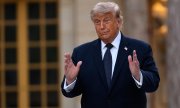
The US and Iran have signed a memorandum of understanding to end the war. US President Donald Trump signed the document at the Palace of Versailles, while Iran's President Masoud Pezeshkian signed it digitally, according to a statement issued by the Iranian Foreign Ministry in Tehran. The Strait of Hormuz is now to be reopened with immediate effect. Further issues – including what will happen with Iran's nuclear programme – are to be negotiated over the next 60 days.
A blow to the US's reputation
The US hasn't achieved any of its purported goals in the war against Iran, Deutsche Welle's Bulgarian service explains:
“Trump launched this war with the promise of putting an end to the regime in Tehran, its nuclear ambitions and its missile programme. Yet the regime remains in power and appears to be stable. The missile programme also remains in place, and any potential progress regarding Iran's nuclear programme can't possibly go beyond what was achieved in 2015 and what Obama had negotiated with Iran. ... The US's reputation will be damaged, the world will have to bear the economic consequences, and the Iranian people will have to suffer under the yoke of a brutal and increasingly radical regime.”
War ends in complete fiasco
Denník Postoj is also sceptical:
“It's hard to say exactly what the US and Israel are supposed to have achieved in this war. ... The Americans may still try to put this disastrous situation in a positive light, but the Israelis, for whom the conflict is a matter of survival, are not fooled. It's common knowledge in Tel Aviv that the war with Iran ended in a total fiasco, and that the blame lies not only with Donald Trump, but also with Benjamin Netanyahu.”
Israel needs a change of strategy
Military means alone will not give Israel the security it seeks, says Der Standard:
“Despite many tactical successes, Israel has not come any closer to its actual goal and has caused enormous suffering in Lebanon. Now Trump, too, stands in the way of a continuation of this policy. ... It's time for Israel to realise that it can never achieve the security it seeks through military force alone. It needs serious diplomacy, as well as allies in the region who would actually be willing to support it – in Lebanon and in other Arab states. But for that to happen, its policy towards the Palestinians will also have to change.”
Not a word about human rights
Something very important is missing from the agreements, Naftemporiki stresses:
“The memorandum of understanding, which paves the way for protracted negotiations on a final settlement, makes no mention whatsoever of human rights. Do you remember what Trump said when the war began? He promised the protesters help, urged them to occupy government buildings, and at the same time condemned the repeated executions of people who had been arrested during the January unrest. Trump now claims that he has no interest in regime change and considers the new mullahs to be more moderate.”
No sigh of relief for consumers yet
The consequences of the war will be felt for a long time to come, laments Le Quotidien:
“Supply chains have not merely been disrupted, but have collapsed. Petrochemical plants have been severely damaged. The black gold won't flow through the pipelines as it did before the conflict. First they must be repaired. Aluminium-producing factories have also been affected by the bombing. ... And that's not all, because the Gulf region also supplies 30 percent of the world's fertilisers. The price of what ends up on our plates will continue to rise. ... So Donald Trump, for his part, is beaming with satisfaction following his 'brilliant' victory over Iran. We, on the other hand, will have to live with the consequences for some time to come.”