(© picture alliance / ASSOCIATED PRESS / Uncredited)

  Iran conflict

  27 Debates

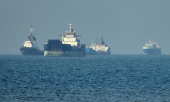
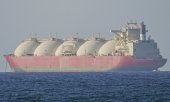
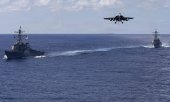
After the initial failure of peace talks with Iran, the US has begun its own blockade of the Strait of Hormuz. According to the US millitary, six merchant ships arriving from Iran have been forced to turn back within the first 24 hours. President Trump has said that a key reason for the blockade is to prevent transit tolls from falling into the hands of the regime in Tehran. What consequences could this provoke?

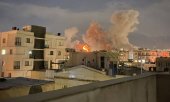
Israel has said that the ceasefire agreed between Washington and Tehran does not apply to its war against the Hezbollah militia in Lebanon and is continuing its attacks. According to the Lebanese Ministry of Health, more than 180 people died in Israeli attacks on Wednesday. Commentators focus on the role of Israeli Prime Minister Netanyahu in this war.

With just a day to go before direct negotiations between the US and Iran begin in Islamabad, both sides are accusing each other of failing to honour the ceasefire. Israel has stepped up its attacks in Lebanon, which Tehran says breaches the ceasefire agreement. And the reopening of the Strait of Hormuz – a key US demand vis-à-vis Iran – remains uncertain.

At the last moment, Tehran and Washington have agreed on a two-week ceasefire. Donald Trump continued to ramp up his threats as the US ultimatum deadline loomed, announcing that 'an entire civilisation will die' if Iran did not reopen the Strait of Hormuz. The initial reaction in the European press is one of shock rather than relief.

After US Secretary of State Marco Rubio lashed out at Nato, US President Donald Trump has now threatened to pull the US out of the defence alliance altogether. In an interview on Wednesday he said that he was seriously considering withdrawal after the war with Iran ends. His comments were prompted by the refusal of several EU countries to assist the US in attacking Iran. How seriously should Europe take this threat?

US Secretary of State Marco Rubio has slammed Spain's government for refusing to allow the US to use its airspace for the Iran war. In an interview he said that Nato could not be "a one-way street" and announced that the alliance would have to be re-examined. Italy also recently denied US fighter jets the right to land in Sicily. Europe's press sees the alliance in grave danger.

The US-Israeli war against Iran – and the ongoing blockade of the Strait of Hormuz – have caused energy prices to soar. Measures to curb petrol prices are being implemented or discussed in several EU countries. Europe's press takes stock of the situation – with a sense of déjà vu.

One month after the US-Israeli attack on Iran and still no peace in sight. Pakistan's government may have announced that it is ready to host talks between Washington and Tehran. Yet media reports say that the US is preparing to send in ground troops. In a further twist, the Houthis in Yemen have also declared war and fired rockets at Israel.

Oil and gas exports from the Gulf region have plummeted as a result of the war with Iran – triggering price spikes on the global market. Although Iran has now reportedly reopened the Strait of Hormuz to cargo ships from "non-hostile countries", European media discuss the problems associated with the supply crisis and potential remedies.

The US is working hand in hand with Israel in the war against Iran. Most recently, the Israeli Air Force has claimed credit for killing Iranian Security Council chief Ali Larijani. Israel, which has been repeatedly attacked by Iranian missiles, is currently also launching attacks on southern Lebanon, from where the Shiite Hezbollah militia has fired missiles at Israel. The media assess Israel's role and tactics on both fronts.

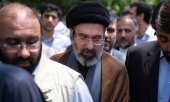
In Iran, the influential secretary of the Supreme National Security Council Ali Larijani has been killed in an airstrike. The fate of the supreme leader also remains unclear: Mojtaba Khamenei has not been seen since the death of his father, Ayatollah Ali Khamenei. The media ask whether the Iranian regime can survive if its leadership continues to be eliminated by Israeli and US attacks.

US President Donald Trump has demanded that Nato member states take action to secure the Strait of Hormuz, warning that otherwise the future of the alliance looked "very bad". His appeal has found little support in Europe. EU Foreign Affairs Commissioner Kaja Kallas stressed that "This is not our war", and German Chancellor Friedrich Merz emphasised that the war with Iran was not a matter for Nato as a defence alliance. The media take stock.

While Iran's de facto blockade of the Strait of Hormuz is causing oil and gas prices to rise sharply, US President Trump has called on Nato and Asian states to help secure this critical waterway for global shipping. Europe's media analyse the US's response to this emerging energy crisis and outline its global economic and social impact.

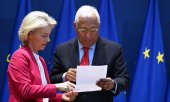
The EU has so far failed to reach a common position on the war in Iran. Differences are evident not only between the leaders of individual countries but also among top figures in Brussels. Commission President Ursula von der Leyen said on Monday that the "old world order" no longer existed, only to be contradicted on Tuesday by Council President António Costa, who said that Europe must ensure that we continue to live in a rules-based world.

In response to the de facto blockade of the Strait of Hormuz, the International Energy Agency (IEA) plans to release strategic oil reserves amounting to 400 million barrels of crude oil. Never before have the agency's 32 member countries taken so much oil from their emergency reserves in a joint action aimed at stabilising the energy market. For the media, the problems are far from over.

"Finally, to the great proud people of Iran, I say tonight that the hour of your freedom is at hand." US President Donald Trump made this promise to the people of Iran in his speech at the beginning of the Iran War. Following the killing of Supreme Leader Ali Khamenei, the regime has appointed his son Mojtaba Khamenei as his successor. Commentators see little to indicate that the mullahs' power base has been weakened.

There are unclear signals as to how long this should continue: on Monday US President Donald Trump said it would end "very soon", but shortly afterwards Israeli Prime Minister Benjamin Netanyahu issued a statement saying that they were "not done yet". The air strikes on Iran intensified on Tuesday, and Tehran also continued its attacks on Israel and the Gulf states. Europe's press casts about for realistic exit scenarios.

The escalating situation in the Middle East and the blockade of the Strait of Hormuz are causing energy prices to skyrocket worldwide. Even after Donald Trump hinted on Monday that the war could end very soon and G7 countries discussed drawing on strategic oil reserves, prices remain well above their level at the end of February. The European press assesses causes, consequences and possible solutions.

Mojtaba Khamenei is to take over as Iran's supreme leader after his father Ali Khamenei was killed in an US-Israeli airstrike. The Israeli military has now threatened to target the successor. US President Donald Trump had declared beforehand that he considered Mojtaba Khamenei to be an "unacceptable" choice, and that any Iranian leader who did not meet with Washington's approval would "not be long in office".

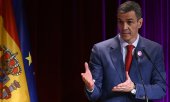
Spanish Prime Minister Pedro Sánchez last week reiterated his "No to war in Iran!" in a televised address. He was responding to US President Donald Trump's criticism of Spain in the presence of German Chancellor Friedrich Merz for refusing to allow the US to use two military bases on its territory. Trump had threatened to sever trade relations with Spain.

The Israeli and US airstrikes against Iran have gone on for almost a week now. Tehran has responded with strikes against Israel and neighbouring Gulf states. The US Senate and House of Representatives have endorsed US President Trump's actions. Meanwhile, oil prices have risen significantly, causing turbulence across the global economy. Commentators in Europe try to predict what course the war will take.

In reaction to ongoing strikes, Iran has fired missiles and drones at Israel, US bases in the region and targets in its wealthy Gulf neighbour states. However, most of the projectiles have been intercepted. Turkey has said it shot down a missile that was apparently aimed at Cyprus. The Gulf states' relations with the Tehran on the one hand, and with Washington and Tel Aviv on the other are becoming increasingly complex.

The conflict in the Middle East is pushing up oil and gas prices. Threats from Iran have paralysed maritime traffic through the Strait of Hormuz, with tankers piling up on both sides. After deliveries from Qatar were suspended the price of liquefied natural gas (LNG) on the Amsterdam stock exchange jumped from below 32 euros on Friday to more than 62 euros per megawatt hour on Tuesday. Europe's press looks at the short-, medium- and long-term consequences.

European states have different stances on the US and Israeli attacks on Iran. German Chancellor Friedrich Merz stressed at a meeting with US President Donald Trump on Tuesday that Germany agrees that the regime in Tehran must be removed from power. The UK initially refused to allow the US to use British military bases for attacks on Iran but has now given permission in specific cases. Meanwhile Spanish Prime Minister Pedro Sánchez has spoken out against the strikes and called them a violation of international law.

The war in the Middle East also has implications for Russia: on the one hand Tehran is a Kremlin ally and supplied Russia with drone technology in particular at the beginning of the war in Ukraine. On the other hand the looming shortages of oil and gas on the global market give Russia an opportunity to increase its earnings on energy exports, which have been restricted by sanctions. The media weigh up the pros and cons.

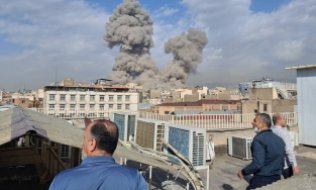
The US and Israel began attacking targets in Iran on Saturday morning, killing the Supreme Leader Ayatollah Ali Khamenei. US President Donald Trump justified the strikes by saying that Iran posed an immediate threat to the US and its allies in the region. Tehran had responded with missile and drone strikes against Israel and several Gulf states where US military bases are located. Europe's press fears the situation could escalate.

Against the backdrop of a massive US military build-up, indirect talks between the US and Iran resumed in Geneva on Thursday. While the main topic was Iran's nuclear programme, the US is also seeking a deal on missile armament. There was no breakthrough but further talks are scheduled to take place in Vienna next week. The media examine the motives on both sides.