
Iran: US relying on economic war now?
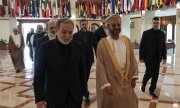
With the two-month negotiation period between Iran and the US now over, there is still no sign of a deal. Trump has threatened to wage an economic war against Iran, adding that the US will punish any country that supports Iran. The president directed particularly harsh words at Oman, saying the US would "bomb the shit" out of it if it gets in its way. Tehran has threatened to launch attacks on US allies in retaliation.
Fewer bombs, but that's about it
Frankfurter Rundschau sees the new threats from Washington as signalling a change of course:
“They're an admission that the conflict with Iran cannot be won in the short term, either militarily or diplomatically. Now economic sanctions are intended to bring the economically beleaguered regime to its knees in the long term. This will likely spare the people of Iran further US attacks, and spare the people of the Gulf states Iranian retaliatory strikes. But otherwise it is not good news. Energy prices will remain high for the foreseeable future, and continue to burden the global economy. For their part the mullahs will continue to terrorise the Iranian people.”
Not the way to break totalitarian regimes
Český rozhlas comments:
“It's almost as if Trump, who has no clue how to end the conflict with Iran, has retreated into a sort of parallel reality. In that reality, the United States supposedly has the situation in the Persian Gulf completely under control, so there is no need for further military attacks on Iran. All that is needed, according to Trump, is an economic blockade to force Iran to capitulate. ... Although Trump's Treasury Secretary, Scott Bessent, speaks of imposing an unprecedented economic isolation on the country, Iran is able to withstand prolonged economic pressure. Totalitarian regimes have a different resilience threshold than democratic states.”
The failure of Trump’s policies
China is the only country that could really up the pressure on Iran, the Frankfurter Allgemeine Zeitung surmises:
“However, Beijing has the Americans firmly in its grip, not just because of their dependence on critical raw materials. The Chinese will not abandon Iran, as they themselves are dependent on its oil supplies. That the US forces are exhausting themselves in the Gulf rather than standing guard in the Pacific also works in their favour. ... Trump is thus digging his own political grave. He'll never achieve his own ill-conceived goals: they're too ambitious, and the paths he's taking lead in the completely wrong direction.”
Trump barking because he can't bite
The Süddeutsche Zeitung explains the motives behind the threats against Oman:
“Trump wants to give his voters in the US the impression that the US military that ran aground in the Strait of Hormuz can still do as it pleases. But it can't. Behind the threats vis-à-vis Oman lies a bitter realisation. Tehran has the upper hand when it comes to the Strait of Hormuz. To secure control over this waterway, which is so vital to the world's energy supply, Iran must quickly bring its Arab neighbours on board – the Saudis, Iraqis, Kuwaitis and Emiratis. And above all Oman, the country on the western shores of the strait. At the end of this war Tehran hopes that a collective security system will emerge in the Gulf. The US would then be out of the picture as a protector of the Arabs. ... Iran would be the dominant power in the Gulf. That is why Trump is barking so loudly.”
Kicking up a big fuss
The Tages-Anzeiger sees the threats as an act of desperation:
“Donald Trump is a bad loser. The rulers in Tehran realised this early on – and over six months of war they have skilfully outmanoeuvred the US President each step of the way, both militarily and politically. Now Trump is having to reassess the few cards he still has in his hand. Will he find another ace or joker? The overwhelming victory from the air has failed to materialise. The political deal on reopening the Strait of Hormuz is turning out to be a non-starter. Strangling the Islamic Republic economically will take time and success is by no means guaranteed. So what can he do? For a start, kick up a big fuss.”
Europe could end up in the line of fire
Večernji list is concerned:
“In the event of a new US escalation, Iran could extend the conflict far beyond the Middle East and even threaten Europe. ... Tehran is considering attacking US military targets in south-eastern Europe. ... Rather than just responding to US strikes in the Middle East, Tehran would show Washington that allies and military capabilities thousands of kilometres from Iran will suffer the consequences of escalation. ... Europe could go from being a bystander to a new front line.”