
Robot Games in China: are the machines overtaking us?
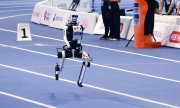
Humanoid robot technology is advancing, with China in particular focusing on speed and innovation. The second edition of the World Humanoid Robot Games is being held in Beijing, where a robot named 'Superman' ran the 100-metres race faster than the human world record holder, Usain Bolt. Commentators discuss China's pioneering role, its lead on the global market and where Europe stands.
Humanoids remain dim-witted for now
The capabilities of humanoids will remain limited for the time being, The Economist surmises:
“As the ignominious end of Superman's running feat [which charged into a wall] demonstrates, the technology still has a long way to go. Chinese companies are expected to sell 50,000 humanoids this year, more than triple last year's figure. They have largely mastered the hardware behind the machines. The software, however, is another matter. ... Given the current state of the technology, and the time that will be required to improve it, a commercial market for humanoids is unlikely to emerge this decade. ... Many will remain dim-witted – and continue charging into walls.”
Global race with an uncertain outcome
When it comes to AI and robots Europe is lagging behind, observes Le Quotidien:
“The message to the world is clear: China is leading the way in the manufacture of humanoid robots – and there is no end in sight. The US is not far behind, but it seems to be a few metres behind in the race. As for Europe, it isn't even worth mentioning. It is still debating the legality of AI even though the technology is already transforming the world of work. So it's clear that to expect a discussion about humanoid robots would be asking a bit too much. When it comes to AI and androids, China is leading the race. It's impossible to say where this will lead.”
Training ground for robotics companies
Gość Niedzielny observes the event with mixed feelings:
“The Robot Olympics offer manufacturers in the robotics industry a sort of testing ground where they can quickly gain insights and push ahead with new developments. This is about a race for a medal. The aim is not for machines to outpace humans in a sprint, but rather in tasks that require for example manual dexterity, a keen eye and quick reactions. This is something to be pleased about, but perhaps also a little daunting.”