
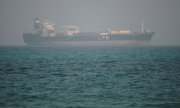
Pro-Iranian forces take control of key oil route
By seizing strategic islands and port cities on Yemen's Red Sea coast, the pro-Iranian Houthi militia is asserting control over the Bab al-Mandab Strait, a vital waterway for global trade. During the Iran war the strait has become a key alternative route for Saudi Arabian oil exports. How will this impact energy markets, which are already under intense strain?
Global trade under threat
Izvestia explains the complexity of the situation:
“After the Strait of Hormuz, Bab al-Mandab is and remains the second most important strait in the world. Up to 15 percent of global oil exports, mostly from Saudi Arabia, pass through it. Furthermore, ships travelling through the Suez Canal pass along Yemen's coastline. So this is not just about oil, but about a long list of goods that are needed in both Europe and Asia. The Houthis have also attacked the strategic oil pipeline linking Saudi Arabia's eastern provinces with its western ones. For a long time, Riyadh managed to bypass the Strait of Hormuz – which was effectively blockaded by the Iranian Revolutionary Guards – and export its oil via the Bab al-Mandab strait. But now this route, too, is under threat.”
Iran has the upper hand
The US has manoeuvred itself into a corner in the region, according to Pravda:
“In fact, Iran and its allies now control two key oil transport routes, paving the way for a diplomatic victory that could strengthen their position. Although the Islamic Republic remains under enormous economic pressure, primarily due to the blockade of its southern ports, the dynamics of the conflict are shifting in its favour. As is always the case when the aggressor relies solely on its technical superiority and fails to take into account the complex reality of the regions it seeks to subjugate, 'unexpected' problems have arisen, such as the occupation of an island in the Red Sea by Iran's allies, the Yemeni Houthis. This will mean further disruptions to oil shipments from the Middle East.”
The Houthis have their own interests
Der Standard concludes:
“The Houthis officially frame the war which has now flared up again as an internal Yemeni conflict: a struggle against the internationally recognised government, which is supported by Saudi Arabia. This government is officially based in the southern city of Aden and is itself divided. The United Arab Emirates, which previously stood alongside Saudi Arabia, have withdrawn from the alliance but are playing their own games in southern Yemen and supporting separatists. All this weakens the forces opposing the Houthis. Formally, the Houthis have not yet joined the US-Iranian war, even though their offensive plays into Iran's hands. Their demands are directed at Saudi Arabia, which they want to stop supporting the Aden-based government.”
Gulf states losing their faith in the US
The blockade exposes the weakness of American security guarantees in the Gulf, Tygodnik Powszechny observes:
“The Arab Gulf states increasingly have the feeling that they have paid billions to the American for weapons and protection that have turned out to be unreliable and failed to safeguard the oil facilities attacked by Iran. Even the United Arab Emirates, which had previously advocated a hard line against Tehran, made contact with the enemy on the sidelines of the recent BRICS summit in Delhi and are now jointly calling for de-escalation. While this does not yet mean that the US has suffered a defeat in the region, it certainly signals the end of its hegemony as well as chaos in the global economy.”
Trump passing the buck
Trump is attempting to shirk responsibility for the global diesel shortages, Večernji list believes:
“According to Trump, it is not the war with Iran, which shows no sign of ending, that is to blame for the potential diesel shortages, but rather the months-long Ukrainian attacks on Russian oil infrastructure. Clearly, what he hopes to achieve with his call [to halt the attacks on energy infrastructure] is to replace any potential shortfall in oil from the Gulf region with Russian, and perhaps also Ukrainian, oil. But that won't be so easy. Russia has imposed an export ban on its oil due to the shortages caused by the Ukrainian attacks. Trump's appeal therefore stands no chance of solving the problem of potential oil and diesel shortages in the short term.”