
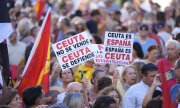
Ceuta: hotspot for political polarisation
The situation in Ceuta remains tense: around 5,000 migrants are currently living in camps in inhumane conditions, leading to clashes with local residents and the police. Nationwide protests in Spain led by the conservative People's Party (PP) and the far-right Vox accuse the central government of failing to act. Meanwhile, Spanish Prime Minister Pedro Sánchez is blaming Russia and Israel for spreading disinformation that lured the migrants into the enclave.
Permanent scene of confrontation
Ctxt.es describes the toxic mix of pressure and misinformation surrounding the events in Ceuta:
“The more a situation deteriorates, the more traction discourse that promises simple and extreme solutions will gain. And the longer a crisis drags on, the more difficult it becomes to return to a political solution. There is therefore the risk that Ceuta will become a permanent scene of confrontation between two sides: the far-right, identity-based movement driven and financed by international Trumpism and a government that is completely overwhelmed by events and is trying to uphold the law while the opposition encourages people to break it.”
Resolve the crisis without undermining democracy
Political scientist Anna López sketches a way out of the impasse in Ceuta in eldiario.es:
“We must break this cycle: tackle the frustration, combat the propaganda, prosecute the networks that organise the violence, and act decisively. And we must protect legitimate protests: anyone seeking to turn them into a mob does not represent the residents of Ceuta. Both strategies can – and must – be compatible. Only in this way can we resolve the crisis in the autonomous city without undermining our democracy.”