
Mercosur agreement: what obstacles remain?
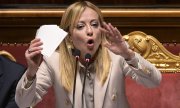
Italy has become the EU second member state after France to voice doubts about the EU Commission's plans to sign the Mercosur trade agreement on Saturday. The deal is "premature", Prime Minister Giorgia Meloni said on Wednesday. Commentators also observe that the opposition to the free trade agreement has by no means been overcome despite safeguard clauses for agricultural products.
More protection for Europe's agricultural products
Italy and France are closing ranks, Corriere della Sera observes:
“It's not yet a full-fledged alliance between Rome and Paris, but it's not far off. The idea of postponing approval of the Mercosur free‑trade agreement brings Italy's strategy and objectives closer to those of France, particularly regarding decisions on the Common Agricultural Policy and their positioning on the international stage. ... The goal is to ensure that agricultural products from South America comply with the same standards as those in Europe in order to avoid unfair competition to the detriment of European farmers.”
Paris on the wrong track
France is alienating its partners, L'Opinion warns:
“Faced with this sectoral rebellion that runs counter to the common good, France is no longer able to devise a coherent strategy and is isolating itself on the European stage. Domestic power struggles and the constant fear of widespread unrest now dictate the policy of a government in despair. By focusing solely on its agricultural sector, Paris has made Mercosur a convenient scapegoat to conceal its own contradictions - as if withdrawal rather than trade diversification were the answer to the new Chinese‑American imperialism! It won't be long before our partners turn their backs on this spectacle of self‑destruction.”
Standing firm together against the predators
Founded during a period of expanding free trade, the EU should take today's changing global dynamics into account, La Croix advises.
“The context is shifting: under Donald Trump the United States has turned protectionist, China continues to distort trade, and geopolitics now plays a growing role: Russia, once a supplier of cheap energy, is now under sanctions. EU leaders must keep this in mind as they meet in Brussels. ... Should free trade be maintained by opening up to new markets, particularly in Latin America? Probably, but only with solid safeguards in place. However, to withstand the great predators, the top priority is to remain united.”