
Wildfires in southern Europe: why so unprepared?
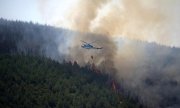
Heat and drought have led to huge wildfires in Portugal, Spain and France. Twelve people have died in Andalusia and in the French Pyrenees 10,000 people have been evacuated. The media discuss the difficulties we face in adapting to the increased fire risk.
Abandoned regions ablaze
Abandoned agricultural land is a breeding ground for wildfires, writes Correio da Manhã:
“We are also to blame because of the state of neglect we have allowed these areas to fall into, and our lack of care and preventive measures. The abandoned plots of land where grass now grows are just waiting to be devoured by the flames of a hot summer. ... For decades, poor families practising subsistence farming provided an unseen civil protection service. But as these hard-working farmers gradually disappeared, the land has been left increasingly unprotected.”
No voters, no action
Portugal's depopulated regions have also been abandoned by politics, complains Visão:
“If we follow the goat paths, what we see is alarming. We know that this land lacks the 'critical mass': no farmers, no shepherds, no population, no machinery, no companies to clear the land. The problem is that there is also no planning, no supervision, or even any political interest in an issue that requires hard work but brings no votes – in deprived areas with no voters.”
Japanese resilience needed
In El País, forestry engineers Verónica García, Olga Rada and María Turiño call for a profound cultural shift:
“It is no longer just a matter of preventing or putting out fires, we must also protect ourselves from them. This is precisely where a profound cultural shift is needed. Just as Japanese society has come to terms with the fact that it lives in an earthquake zone and has developed a collective culture of preparedness and self-protection, our society must also accept that we are now living with structural climate risk. Facing this fact does not mean giving up; it mean preparing ourselves. In many places, local residents are already being encouraged to get involved in prevention and emergency measures.”